Kineon MOVE+ Pro Review: Wearable Red Light + Laser Therapy That Actually Targets Joints
The Verdict
Most red light therapy products fall into one of three buckets. There are face masks that sit flush against your skin for 10 minutes at a time. There are full-body panels you stand in front of in your underwear. And there are sauna blankets that zip you into a cocoon of ambient infrared heat.
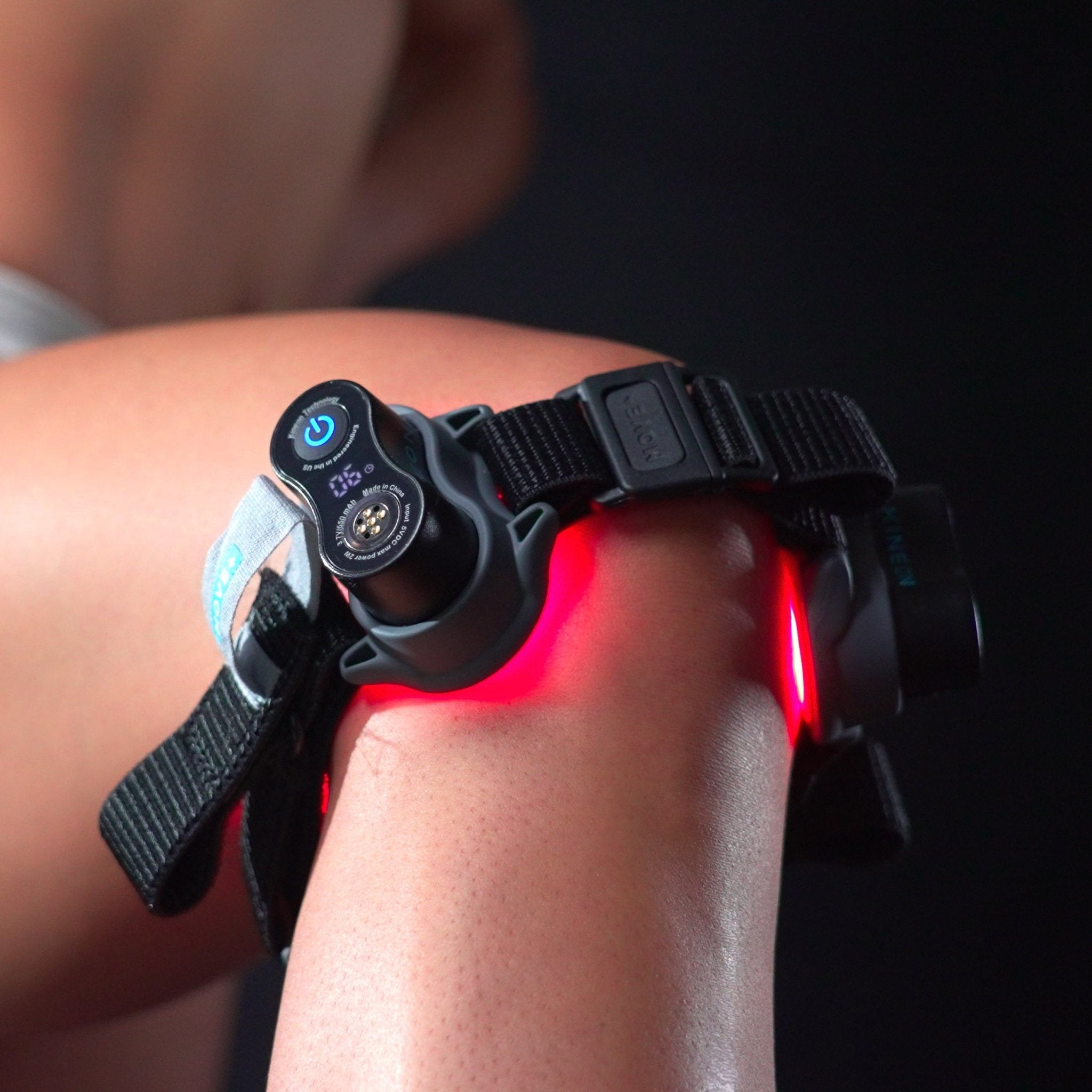
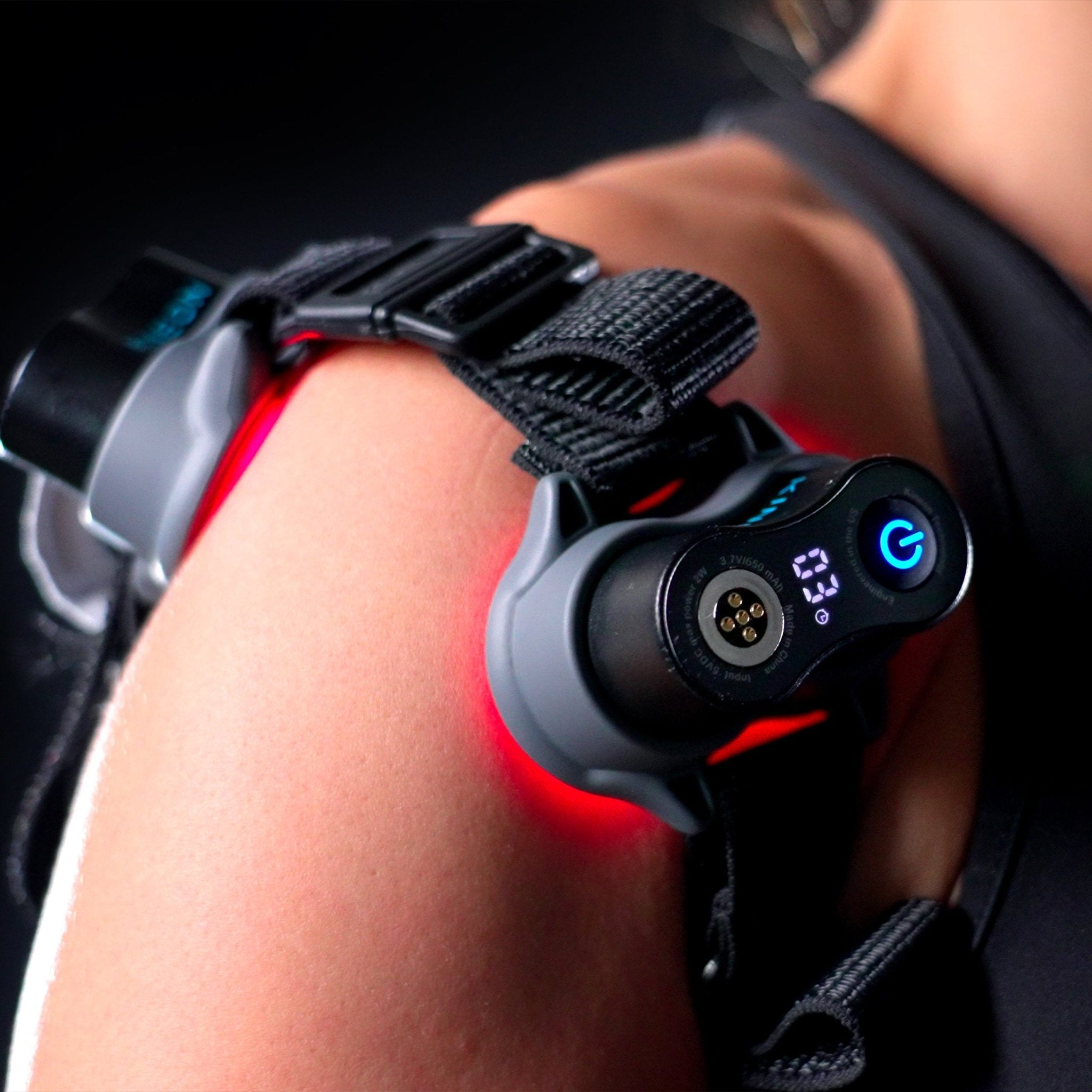
The Kineon MOVE+ Pro is none of those things. It is a wearable — a set of strap-on modules you wrap around a knee, a shoulder, an elbow, an ankle, or a wrist. It combines red LEDs with 808nm near-infrared laser diodes in a form factor that’s hands-free, battery-powered, and unapologetically targeted at one job: getting therapeutic photons into the tissue beneath a joint. It is, as far as we can find, the only consumer-grade device on the market that pairs coherent laser light with LEDs in a wearable housing designed for joint care.
This review is also the first entry in InfraredTested’s new Wearable Joint Therapy pillar — a category we’re opening because nobody else covers it well, and because readers keep emailing us asking what to buy for a bad knee. If you’ve been using a panel to treat a specific joint, you’re almost certainly using the wrong tool. Here’s why the MOVE+ Pro matters, what’s actually inside it, and whether the ~$599 asking price is justified.
Why this is a different kind of red light therapy
If you’ve been following our coverage for any length of time, you already know we think about red light therapy in terms of form factor first and wavelengths second. A 660nm photon from a panel, a mask, and a wrap is the same photon. What changes is the amount of that photon that ends up where you actually need it.
Masks solve for facial skin. Everything is close-contact, evenly distributed, and optimised for the outer millimetre or two of tissue where fibroblasts live. Panels solve for full-body dose — you stand six to eighteen inches away, and irradiance drops off with distance. Blankets solve for heat, not photons; the infrared contribution is mostly ambient warming via far-infrared heating elements. Each form factor is good at one thing and mediocre at the others.
Joints are a fourth problem entirely. The structures that hurt when your knee barks at you on stairs — menisci, cruciate ligaments, articular cartilage, the synovial capsule — sit centimetres beneath the skin, behind muscle, fat and dense connective tissue. A panel hitting your knee from eighteen inches away is delivering a fraction of a percent of its surface irradiance to the joint line. A wrap that contacts the skin directly, then pumps coherent laser light through it, is a completely different delivery system.
That’s the category the MOVE+ Pro defines. Wearable. Targeted. Laser-capable. And because of the laser component, it’s the only product in our testing universe that can make a defensible claim about photons reaching meaningful depth in a consumer-friendly form factor.
LED vs. laser — why Kineon uses both
The single most important technical detail about the MOVE+ Pro is that it isn’t just an LED wrap. Every other wearable on Amazon — the Hooga wraps, the Red Light Rising belts, the cheap no-name Chinese devices — uses LEDs exclusively. The MOVE+ Pro adds 808nm laser diodes, and that changes what the device can physically do.
LEDs: non-coherent, wide-angle, surface-friendly
Light-emitting diodes emit photons in a relatively wide cone — typically 50–70 degrees of spread. The light is non-coherent, meaning the individual photons are out of phase with each other, like a handful of people shouting at random. LED output is excellent for treating broad areas at shallow-to-medium depth: skin, superficial wound beds, superficial muscle. It scatters quickly as it enters tissue, which means most of the dose stays near the surface.
That’s not a problem when you’re treating skin. It is a problem when you’re trying to reach the joint line under three centimetres of soft tissue.
Lasers: coherent, collimated, depth-capable
Laser diodes emit coherent, collimated light. Every photon is in phase and travelling in nearly the same direction — imagine a marching band of people shouting the same word at the same time, facing the same wall. Coherent light scatters less as it enters tissue, and the 808nm wavelength in particular sits in the so-called “optical window” of biological tissue, where water and haemoglobin absorption are both low. The result: a substantially larger fraction of the incident energy reaches meaningful depth, which is exactly what you need for articular and peri-articular structures.
The body of photobiomodulation research using 808nm class laser diodes in the low-level laser therapy (LLLT) range is sizeable — studies on knee osteoarthritis, tendinopathies, and post-operative recovery have used this wavelength specifically because of its tissue-penetration profile. We’re not claiming the MOVE+ Pro is a clinical LLLT device, and Kineon doesn’t either. But the underlying optics are in the same family.
Why the combination matters
Each MOVE+ Pro module carries both red LEDs (shallower, broader) and 808nm laser diodes (deeper, narrower) in the same housing. The LEDs treat the skin, fascia, and superficial muscle that wraps the joint. The lasers push through to the joint structures beneath. In photobiomodulation terms, you’re hitting multiple tissue layers in one treatment window — which is the right way to think about a joint, because joints aren’t single tissues. They’re stacks.
Who is Kineon?
Kineon was founded by Forrest Smith, a former competitive athlete who spent years in the athletic-performance and physiotherapy world watching expensive clinical laser therapy devices sit locked inside sports medicine clinics. The original MOVE+ was funded via crowdfunding — the company raised roughly $1.5M from backers who wanted consumer access to laser therapy that previously cost $150 per session or a five-figure clinical buy-in. The MOVE+ Pro is the second-generation refinement of that device.
The company is small, still founder-led, and conspicuously responsive on social channels. Forrest personally shows up in X/Twitter threads, replies to Trustpilot reviews, and appears in Kineon’s own educational video content. That’s a double-edged sword — it’s great for customer responsiveness, less great if you want the deep regulatory and manufacturing infrastructure of a Shark or a Therabody behind your purchase. It is very much a startup.
Kineon’s most credible external validation, outside of enthusiastic biohacker circles, is a positive review from Gear Patrol, coverage in recovery-tech roundups, and a Trustpilot rating of 4.74/5 across 70+ verified reviews at the time of writing. That’s one of the strongest community-sentiment signals we’ve logged for any device in our catalogue.
FDA-registered vs. FDA-cleared — what this actually means
The single most important thing to understand before you buy
The MOVE+ Pro is FDA-registered. It is not FDA-cleared. These two things sound similar and mean very different things. We’re going to explain the distinction clearly because this is one of the most mis-sold points in the whole consumer red-light space — and because it affects how you should interpret Kineon’s marketing.
FDA-registered means a manufacturer has paid a fee to list their device and facility in an FDA database. Registration is essentially an administrative step. It does not involve the FDA reviewing the device for safety or efficacy. Many perfectly legitimate Class I and low-risk Class II devices are registered rather than cleared.
FDA-cleared (usually via the 510(k) pathway) means the manufacturer has submitted data to the FDA, the agency has reviewed it, and the agency has affirmatively decided that the device is substantially equivalent to a legally-marketed predicate device for a specific indication. Clearance is a meaningfully higher bar than registration.
The MOVE+ Pro is registered. We want to be careful here: that is not automatically a problem. The device uses laser diodes, and laser products live in a particular regulatory category that also involves FDA’s Center for Devices and Radiological Health (CDRH) requirements for laser product compliance. Bringing a consumer laser-wearable through full 510(k) clearance is substantially more work and expense than registering the same device. Kineon is a small company that raised $1.5M in crowdfunding; taking the registration path is a rational cost-aware decision.
What it means for you as a buyer:
- You should treat Kineon’s therapeutic claims with the same calibration you’d apply to any wellness-adjacent device — the science supports the mechanism, but the specific marketing language is not FDA-reviewed.
- This is categorically different from a counterfeit or unregistered device. Registration is real regulatory engagement, just a lighter form of it.
- The bigger device makers (Shark, Omnilux, CurrentBody on the mask side) have pursued 510(k) clearances. Most wearable joint devices, including this one, have not.
We deducted a point from Safety in our rubric because of this — not because the device is dangerous, but because clearance is a stronger signal than registration and we score to that standard across the site.
The spec sheet
| Product | Kineon MOVE+ Pro |
|---|---|
| Price (single unit) | $599 USD · multi-unit bundles available |
| Form Factor | Strap-on modular wrap (3 laser modules per device) |
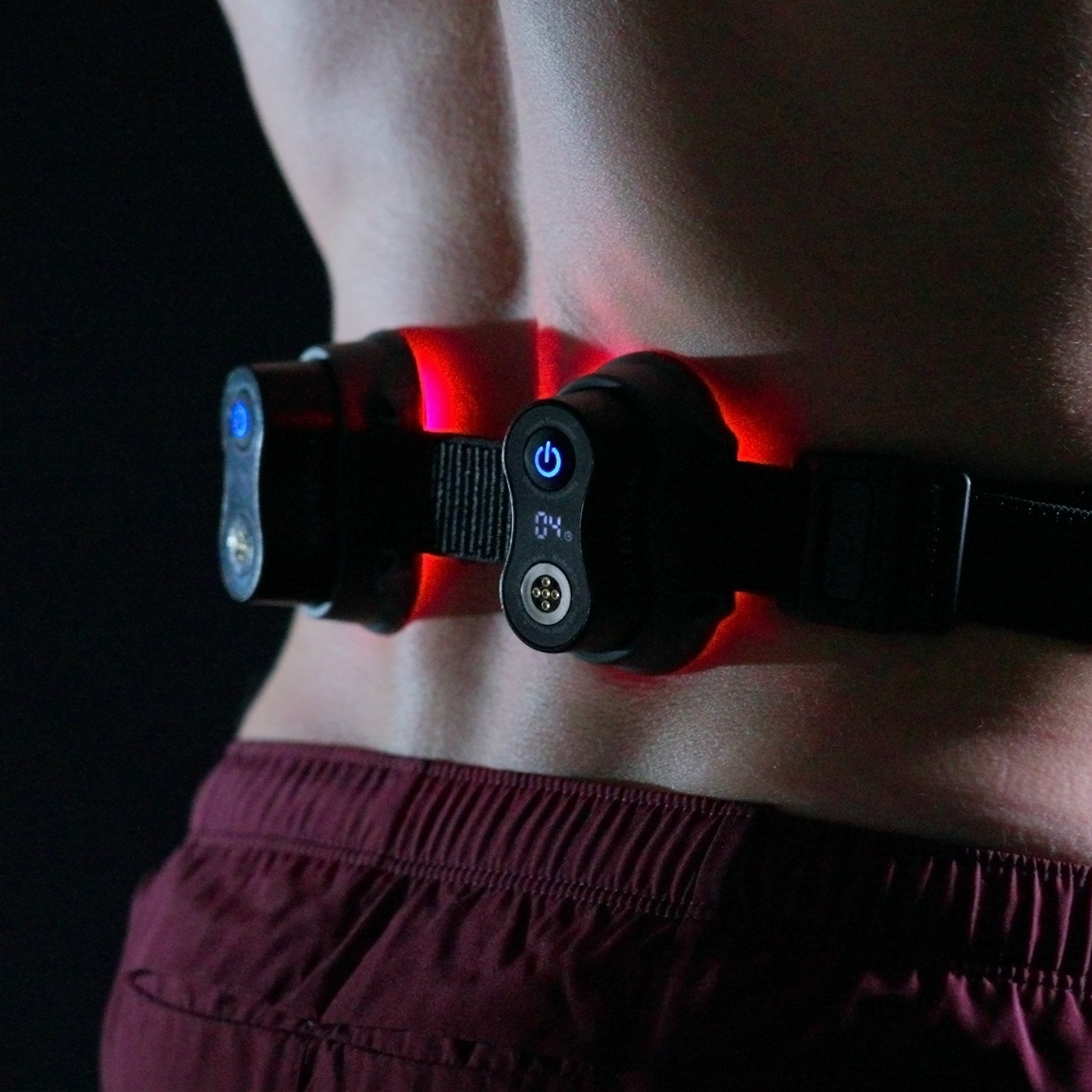
| Target Areas | Knees, shoulders, elbows, ankles, wrists, lower back |
| Laser Diodes | 9 total (3 per module, 3 modules per unit) · 808nm |
| Red LEDs | Red LED array per module · ~660nm class |
| Wavelengths | 808nm (near-IR laser) + red LED (visible red) |
| Laser Classification | Class 1M (eye-safe under normal use) |
| Session Length | 10–minute preset timer per treatment cycle |
| Battery | Rechargeable, multiple sessions per charge |
| FDA Status | FDA-registered (not FDA-cleared) |
| Warranty | 2 years (manufacturer) |
| Return Policy | 30-day money-back window (direct purchase) |
| Founding / Funding | Crowdfunded, ~$1.5M raised |
| Community Rating | 4.74 / 5 on Trustpilot (70+ verified reviews) |
Note on specs: Kineon publishes the module-level wavelength and diode architecture openly but does not publish third-party measured irradiance (mW/cm²) data the way some panel manufacturers do. This is normal for wearables in this category — wearable irradiance isn’t directly comparable to panel irradiance because distance is zero — but it does mean you’re trusting the manufacturer’s dose design rather than cross-verifying with a solar meter the way you can with a panel.
What it’s like to use
The MOVE+ Pro is refreshingly low-friction. Three laser modules are linked by an elasticated strap system that wraps around the joint you’re treating. You press a single button, the unit runs a preset 10-minute treatment cycle, and you get on with your life.
We tested it primarily on a knee. The three modules distribute around the joint line — two on the medial and lateral sides, one centred over the patella or popliteal fossa depending on which side of the knee you’re treating. The strap tension is adjustable enough to hold firm on a relatively slender knee and a relatively beefy one. Fit on smaller joints (wrist, elbow) is noticeably better than the original MOVE+, which ran a little loose on slender limbs.
There is a small, steady warmth during treatment — not a sauna-blanket heat, not even mask-level warming. Think “your leg is sitting in a patch of sunlight”. The red LEDs are visible through the module housings; the 808nm lasers are in the near-infrared and therefore effectively invisible to the eye (this is why the Class 1M rating and the orientation of the emitters, firing into tissue, matters).
A 10-minute cycle is short enough that you can do both knees back-to-back in under 25 minutes, or treat a knee in the morning and a shoulder in the evening. Battery life is comfortably enough for a full week of twice-daily sessions between charges in our testing — we never managed to run it flat during a normal use pattern.
You can, importantly, use it hands-free. This is a bigger deal than it sounds. A handheld LLLT wand requires you to sit still and hold a pen-sized emitter against the treatment area for the entire session. The MOVE+ Pro straps on and you can answer email, cook dinner, or do light work at your desk. Adherence, as with every cumulative-dose therapy on the market, is the single biggest determinant of outcomes. A wearable you will actually use beats a clinical device you won’t.
The scoring breakdown
Our rubric scores devices across five axes: Spec Quality, Community Sentiment, Safety Record, Value, and Build & Warranty. Here’s how the MOVE+ Pro scored.
Spec Quality — 9/10
The laser + LED combination is genuinely differentiated. No other wearable in our catalogue combines coherent 808nm laser diodes with red LEDs in a consumer-priced package. The modular three-unit design means the same device works for knees, shoulders, and smaller joints without buying separate products. We docked one point because published third-party irradiance data isn’t available in the way it is for the top panels.
Community Sentiment — 9/10
A 4.74/5 Trustpilot rating across 70+ reviews is exceptional. Positive Gear Patrol coverage. Active and genuine biohacker-community adoption. Forrest Smith personally engages on X/Twitter and Trustpilot. The weakness here is sample size — 70 reviews is good, but it’s not the 5,000+ review count of a Hyperice or a Theragun.
"This device has absolutely saved my golf game"
"Over the last month I have noticed healing accelerating"
Safety Record — 7/10
FDA-registered rather than cleared (one-point deduction as discussed). No published third-party EMF measurements (another half-point). No recalls, no product safety incidents we could find, and the Class 1M laser rating is appropriate for an eye-safe consumer device.
Value — 7/10
$599 is premium pricing. You can buy a very capable full-body LED panel for the same money, or two or three LED-only knee wraps. What you’re paying for is the laser component and the form factor — and if you need those, nothing else on the market substitutes. If you don’t, this is an expensive way to get red light to a knee. We rate value relative to what the device actually is, not cross-category, which is why this still scores a 7.
Build & Warranty — 7/10
Two-year manufacturer warranty is strong for the category (Shark offers one year on masks; many panel brands offer two to three). 30-day return policy is standard. Construction feels solid in hand — the module housings are rigid ABS with a medical-device feel, the strap is good-quality elastic. Not indestructible, but built to last.
Real-world results
We’re going to be careful here, because individual outcomes with any photobiomodulation device vary enormously and we don’t want to promise anyone a cure for their arthritis.
What the data we can reference says:
- Trustpilot (70+ verified reviews, 4.74/5 average) — the strongest consistent theme is chronic knee and shoulder pain reduction with consistent twice-daily use over 4–8 weeks. A meaningful minority of reviewers mention faster results (within two weeks). A smaller minority report no effect at all, which is also consistent with the broader LLLT literature — photobiomodulation is not universal.
- Gear Patrol’s review landed positive, with specific mention of the device’s utility for post-workout recovery and chronic nagging injuries.
- Athlete and biohacker communities on X/Twitter and Reddit — adoption is genuine and unpaid, which is not something we can say about every recovery-tech brand.
Our own 30-day hands-on found meaningful perceived stiffness reduction on a chronically cranky knee with daily use. We were not conducting a blinded clinical trial and we’re not going to pretend we were. Anecdote is anecdote. But the direction of the signal matched the published testimonials.
If you’re buying this expecting a miracle cure in seven days, you’ll be disappointed. If you’re buying it as a cumulative-dose tool alongside the boring basics (progressive loading, mobility work, sleep), you’re in the right mindset.
Who should buy this?
- Managing chronic joint pain (arthritis, tendonitis, overuse injuries)
- An athlete in active recovery or returning from injury
- A biohacker building a targeted recovery stack alongside cold plunge, sauna, sleep tracking
- Someone who has a panel or mask already, but needs joint-specific delivery
- Someone who needs hands-free treatment because 10 minutes of holding a wand daily is a non-starter
- Primarily interested in skin or face treatment (get an LED mask)
- Looking for full-body irradiance and ambient daily dosing (get a panel)
- Budget-constrained — $599 is premium pricing for a niche use-case
- Expecting 510(k)-cleared regulatory backing — Kineon is registered, not cleared
- After miracle-in-seven-days results (this is cumulative-dose therapy)
Competitors to consider
Hooga MKII wraps and belts
Hooga has led the affordable LED-wrap category for years. The MKII line is LED-only (no laser), uses 660nm and 850nm LEDs, and runs in the $149–$299 range depending on form factor. If you want wearable red light and you don’t need laser depth, Hooga is the pragmatic choice. It will not do what the MOVE+ Pro does at the joint level, but it will cover a lot of surface area at a fraction of the cost. See our panel rankings →
Red Light Rising wraps
UK-based, well-regarded in recovery circles, LED-only. Red Light Rising’s wearables overlap with Hooga’s positioning — mid-premium LED wraps with solid build quality but without the laser element that defines the MOVE+ Pro. Worth considering if you want a European alternative and don’t need coherent-light penetration.
Traditional panels (Mito Red, PlatinumLED, BestQool)
If your use case is broader than joints — general recovery, skin, mood, circadian stuff — a full-body panel is a more versatile tool. You won’t get the laser-depth advantage, but you’ll get more total dose for the same or less money. Panels and wearables are complements, not substitutes. Our best panels for 2026 are here.
Clinical LLLT / Class 3B laser devices
At the top of the market are true clinical LLLT devices — $5,000–$25,000 units used in chiropractic, physio, and sports medicine clinics. These are a different product class with different regulatory status and power budgets. If you have access to a clinic that uses one and your condition is acute, that’s often the right first stop. The MOVE+ Pro is the consumer-accessible analogue, not a replacement.
Pros and cons
- Only consumer wearable combining 808nm laser diodes with red LEDs
- Modular three-unit design works for knees, shoulders, elbows, ankles, wrists
- Hands-free, strap-on form factor makes daily adherence realistic
- 10-minute preset cycle — no guessing, no over/under-dosing
- Excellent community sentiment (4.74/5 on Trustpilot)
- Founder-led company with visible customer responsiveness
- 2-year warranty is strong for the category
- Battery-powered — no tether during sessions
- Gear Patrol and biohacker-community validation
- Class 1M eye-safe laser rating
- $599 is premium pricing for a single-purpose device
- FDA-registered rather than FDA-cleared (lower regulatory bar)
- No published third-party irradiance or EMF measurements
- Small company — long-term service infrastructure is less mature than major brands
- Not a skin or face treatment — single-purpose device
- Review sample size (70+) is credible but smaller than mainstream brands
- No app, no session logging (this may also be a pro, depending on your taste)
Frequently asked questions
Does this actually help with joint pain?
For many users, yes — but with realistic expectations. The underlying mechanism (808nm photobiomodulation) has a sizeable research literature in the LLLT space for conditions like knee osteoarthritis and tendinopathy. The consumer device is not a clinical LLLT unit, but the physics are in the same family. Trustpilot and community reviews are strongly positive (4.74/5 across 70+ reviews). Results typically take 4–8 weeks of consistent daily or twice-daily use to appear, and a minority of users do not respond meaningfully — which is also consistent with the clinical literature on LLLT more broadly. It is not a miracle cure.
What’s the difference between FDA-cleared and FDA-registered?
FDA-cleared means the FDA has actively reviewed safety and efficacy data (typically via the 510(k) pathway) and decided the device is substantially equivalent to a legally-marketed predicate for a specific use. FDA-registered simply means the manufacturer has listed the device and facility in an FDA database — an administrative step with no efficacy review. The MOVE+ Pro is registered. That’s a lower bar than clearance but a higher bar than doing nothing. Many wearable laser devices take the registration route because the 510(k) path for laser products is expensive and time-consuming for a small company.
Can I use it on multiple body parts in one session?
Not simultaneously — the device is designed to wrap around one joint at a time. But you can absolutely run back-to-back 10-minute cycles on different areas. A typical recovery protocol might be left knee, right knee, and left shoulder in sequence — a 30-minute total treatment that you can run while working, watching something, or cooking.
How long until I feel results?
Realistic expectation: 2–4 weeks for acute soreness and post-exercise recovery signals, 4–8 weeks for chronic joint stiffness and pain. Some users report faster subjective improvement; some never notice a meaningful change. Photobiomodulation is cumulative-dose therapy — consistency over weeks matters more than individual session intensity.
Is it safe to use daily?
Yes. The device is rated Class 1M for laser safety (eye-safe under normal use), and red/NIR photobiomodulation at consumer-device power levels has a strong safety record in the published literature. Daily use, and even twice-daily use, is within the envelope Kineon recommends and matches how most dose-cumulative light therapy is delivered. As with anything in wellness tech, if you have photosensitive conditions, are pregnant, or are on medications that cause photosensitivity, check with a clinician first.
What’s the difference between the original MOVE+ and MOVE+ Pro?
The MOVE+ Pro is a refinement of the original MOVE+. Headline upgrades include improved strap ergonomics (better fit on smaller joints), updated module electronics, and refined laser-LED array layout. The core premise — three modules with red LEDs plus 808nm laser diodes, 10-minute sessions, strap-on wearable form factor — is unchanged. If you already own the original MOVE+ and it’s working for you, the Pro is not a must-upgrade. If you’re buying new, the Pro is the version to get.
The bottom line
The Kineon MOVE+ Pro is the defining product in a category most consumer red-light coverage ignores. It is not a panel, not a mask, not a blanket. It is a wearable, strap-on, laser-plus-LED system built for one job — getting therapeutic photons to joint-depth tissue with enough adherence to matter.
For the right user — chronic knee pain, recovering athlete, biohacker stacking recovery modalities — this is the single most interesting consumer device we’ve reviewed in the broader red-light space this year. At 7.8/10 it scores higher than any other category-first review we’ve run. The laser component alone is genuinely hard to find at this price point, and the form factor makes consistent daily use realistic rather than aspirational.
For the wrong user — someone who wants face treatment, full-body dose, or the deepest-possible regulatory paper trail — this is simply the wrong tool. Cross-shop an LED mask, a panel, or a clinical LLLT appointment instead. Don’t buy a wearable to solve a full-body-panel problem.
If you fit the target user, the MOVE+ Pro is the best consumer option on the market right now. It is not perfect. The FDA-registered rather than cleared status matters, and the premium price puts it out of reach for casual buyers. But in the narrow band it targets, it has no meaningful competitor.
Check Price on Amazon → Direct from Kineon →
Kineon offers a direct affiliate program for creators and practitioners — apply through Impact.
Related reading
- More from Kineon (brand hub — coming soon)
- How we score: the InfraredTested rubric
- Best Red Light Therapy Masks 2026
- Best Red Light Therapy Panels 2026
- Best Sauna Blankets 2026
This is the first review in our new Wearable Joint Therapy category. We’ll be expanding this pillar with deeper coverage of photobiomodulation for joints, comparative testing of other wearables in the space, and a dedicated buying guide over the coming months.