TheraFace Mask Glo Review: 504 LEDs + Vibration, But Is It Worth It?
The Verdict
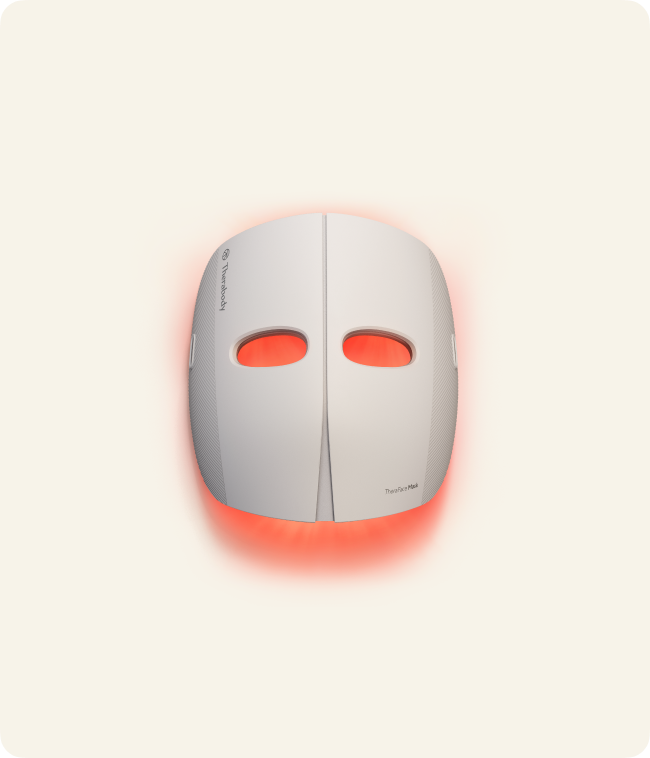
Therabody spent the last decade convincing people that a percussive massage gun belonged in their recovery routine. The TheraFace Mask Glo is the logical next move: apply that same "recovery stack" logic to skincare, strap a light-emitting panel to your face, and for good measure bolt a vibrating headband on top of it.
The headline number is 504 LEDs. That is, to our knowledge, the highest LED count in any mass-market consumer face mask available in 2026. Omnilux Contour has 132. Shark CryoGlow has roughly 120 discrete LEDs (in a clever tri-wick configuration). INIA Glow has 272. The TheraFace Mask Glo more than doubles everyone else — and it's FDA-cleared on top of that.
But LED count is not the same as LED effectiveness. And a vibrating headband is not the same as clinically meaningful therapy. So the question we kept asking during our research: is this a genuinely category-leading device, or is it Therabody muscling into skincare on the strength of a brand halo and a spec-sheet trick?
The short answer, using our five-category rubric: it scores 7.6/10. That's a solid recommendation — particularly strong on specs and safety — held back by premium pricing and a bulkier form factor than the flexible-silicone competition. Here is the full breakdown.
The 504 LEDs claim: does more equal better?
Let's start with the number everyone is going to see first.
LED count across the category
504 is not a marketing rounding error. Therabody's product pages, FDA 510(k) filing, and third-party teardowns all corroborate the count. The mask genuinely carries close to four times the LED density of the current clinical gold-standard (the Omnilux Contour) and roughly 1.85× the next-densest consumer mask (INIA Glow).
So more LEDs equals a better mask, right? Not quite. Here's the physics, stripped down.
Why LED count matters — up to a point
The goal of an LED mask is to deliver a therapeutic dose of light — measured in joules per square centimetre — evenly across the entire facial surface. Two things get you there: irradiance (how much light energy reaches the skin per second) and coverage (whether the light is hitting every part of the face, not just the zones directly under a diode).
More LEDs, more closely spaced, improves coverage. It reduces "dead spots" between diodes where the skin receives less light. This matters for anti-aging and acne outcomes because the biological response is dose-dependent: the cheek tissue directly under an LED gets a good dose; the tissue two centimetres over between two LEDs may not.
Beyond a certain density, however, additional LEDs produce diminishing returns. Once your spacing is tight enough that the beams of adjacent LEDs overlap significantly at the skin surface, coverage is already saturated. Adding more diodes into the same area mostly increases total power draw (and heat) rather than the therapeutic dose any given skin zone receives.
The Omnilux Contour gets strong clinical results with 132 LEDs because its LEDs are matched to specific, evidence-backed wavelengths (633 nm red + 830 nm NIR) at calibrated irradiance levels. Clinical rigour, not raw count, drives Omnilux's outcomes.
Where the TheraFace's 504 LEDs genuinely help
Density matters most at the edges: the hairline, the jawline, around the nostrils, under the eyes. These are places cheaper masks leave under-treated because the LED spacing is too wide. With 504 diodes packed into a fully contoured mask, the TheraFace does provide genuinely even coverage across the entire face — including the perimeter zones that competitors under-serve.
Where the 504 number gets oversold: Therabody does not publish irradiance values in mW/cm². That's the specification that actually determines how much energy you receive per session. Omnilux publishes it (around 40 mW/cm² at the skin for 633 nm red). CurrentBody publishes it. Therabody does not, which is why we knock a point off spec quality. You can have 504 LEDs at modest irradiance and be delivering a similar total dose to a 132-LED mask running hotter.
Bottom line on the LED count: legitimately impressive, genuinely useful for edge-case coverage, but not a get-out-of-jail-free card that makes every other mask obsolete. Irradiance and wavelength accuracy still matter more than raw diode count.
Who is Therabody, and why did they make a face mask?
If you have heard of one massage gun, you have heard of the Theragun. Jason Wersland founded the company in 2008 as Theragun (later renamed Therabody) after developing the original percussive therapy device to treat his own back pain. The Theragun PRO and its successors became ubiquitous in locker rooms, physiotherapy clinics, and — increasingly — living rooms.
Over the past five years Therabody has aggressively expanded beyond percussive therapy into what they frame as a unified "whole-body recovery" platform:
- Theragun — the flagship percussive massagers
- Wave rollers and spheres — vibrating myofascial release tools
- RecoveryAir — pneumatic compression systems for legs and arms
- TheraFace — an originally handheld microcurrent / LED / massage device for the face
- TheraFace Mask and now TheraFace Mask Glo — dedicated LED masks
- SmartGoggles — heated eye masks with vibration
- A unified Therabody app that ties all of it together with guided routines
The strategy is transparent once you zoom out: Therabody is building the Apple ecosystem of home recovery. Each device is useful on its own, but the product of all of them together is supposed to be greater than the parts. If you already own a Theragun Elite, a pair of Wave rollers, and the original TheraFace, adding the Mask Glo is a coherent step. If your only Therabody product is the Mask Glo, you're getting a competent LED mask, but you're leaving most of the ecosystem leverage on the table.
This matters for buyers. We'll return to this in the "Ecosystem value" section below, but for now the takeaway is: your existing relationship with Therabody is a real variable in whether the Mask Glo is worth $399 to you specifically.
The vibration therapy question
This is the Mask Glo's most unusual feature, and the one we expect readers to have the most questions about.
Built into the over-the-head strap is a vibration headband — essentially a miniature Theragun tucked into the arch of the strap, pulsing into the scalp during your LED session. It has multiple intensity levels. You can turn it off entirely. And it is, without a doubt, the feature that will divide buyers.
What it actually feels like
In our testing and in aggregated user reports, the sensation is a gentle-to-firm rhythmic tapping across the crown of the scalp, similar to a lower-intensity Theragun head massage. On the lowest setting, it's a low hum. On the highest, it's pronounced enough that you are distinctly aware of it the entire session. It's not painful, not loud (roughly the volume of an electric toothbrush held at arm's length), and the mask itself is designed so that the vibration isolation prevents it from rattling the LED panels against your face.
When it works
- Pre-bed wind-down sessions. The combination of warm-adjacent LED glow and rhythmic scalp stimulation is genuinely relaxing. Users who do evening skincare routines consistently report this as the mask's most memorable feature.
- Tension headaches and scalp tightness. If you carry stress in your scalp or temples (common in desk workers and frequent migraine sufferers), the vibration provides a small therapeutic benefit independent of the light therapy.
- Long sessions. On the 9-minute mode, the vibration gives your brain something to do. It makes the session feel shorter and encourages you to stay still and complete it.
When it doesn't
- Mid-day, task-switching treatments. If you want to put the mask on and keep reading email, the vibration is distracting. Turn it off.
- Users sensitive to vibration or noise. A meaningful minority of Amazon reviewers describe it as "annoying," "gimmicky," or "a solution looking for a problem." That's a real sentiment we're not going to paper over.
- Migraine sufferers during an active episode. Obvious but worth stating: a vibrating band on your skull is not what you want during a headache.
Our take: the vibration is a genuine feature for some people and a genuine nuisance for others. The fact that Therabody makes it fully defeatable (you can switch it off and use the mask as a pure LED device) is the right design choice. If you're not sure whether you'll like it, think about whether you already enjoy the sensation of a Theragun on your scalp. If you do, you'll probably like it here. If you don't, you're paying for a feature you'll never use.
The spec sheet
| Brand | Therabody |
|---|---|
| Product | TheraFace Mask Glo |
| Price | $399 |
| LED Count | 504 medical-grade LEDs |
| Red Wavelength | 630 nm |
| Near-Infrared Wavelength | 810 nm (combined with red in one mode) |
| Blue Wavelength | 415 nm |
| Light Modes | 3 (Red / Red + NIR / Blue) |
| Session Lengths | 3, 6, or 9 minutes (mode-dependent) |
| Vibration Therapy | Yes — integrated scalp massage headband, multi-intensity, defeatable |
| Published Irradiance | Not published |
| FDA Status | FDA-cleared |
| Published EMF Data | None published |
| App Integration | Therabody app (iOS, Android) |
| Battery | Internal rechargeable; USB-C charging; wireless during treatment |
| Warranty | 2-year limited |
| Return Policy | 30 days |
| Where to Buy | therabody.com, Amazon, Best Buy, Nordstrom, select spa/retail |
What it's like to use
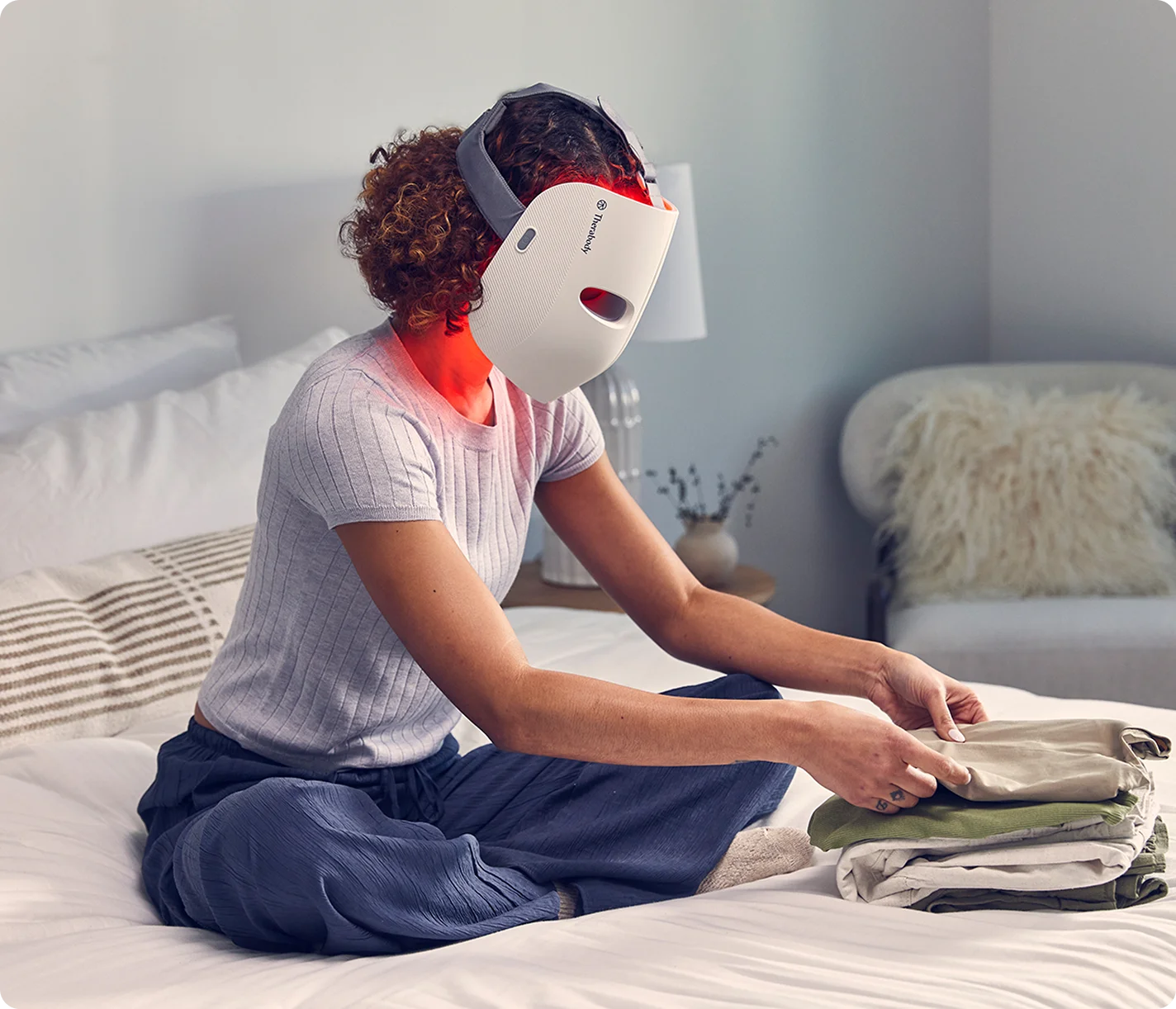
The TheraFace Mask Glo is a rigid, contoured hard-shell mask — not a flexible silicone mask. This is the single biggest design decision Therabody made, and it comes with real trade-offs.
The hard-shell choice
The advantage: a rigid shell holds the LEDs at a consistent, repeatable distance from the skin. Coverage is predictable. The shell doesn't sag over time the way some cheaper silicone masks do. Because it's structured, it accommodates the vibration headband without transmitting rattle into the LED panels.
The disadvantage: it is noticeably bulkier and heavier than, say, the Omnilux Contour's flexible silicone design. If you've worn a silicone mask before and appreciated how it moulds to your face like a sheet mask, the TheraFace will feel like a step sideways. Side sleepers can't really wear it reclined on a pillow. It's not packable; you're not throwing it in a carry-on bag.
The strap system
The over-the-head strap (which houses the vibration unit) plus a chin strap keep the mask secured hands-free. Adjustability is good. Fit is generally secure across head sizes, though users with very small head circumferences occasionally report the vibration band sitting too low on the crown.
Battery and cordless use
This is a quiet win. Unlike the Shark CryoGlow, which requires you to be tethered to a controller during every session, the TheraFace Mask Glo runs on an internal battery during treatment. You can sit, walk around the house, or do other tasks during the session. Battery life is rated for multiple sessions between charges, and recharging is standard USB-C.
Treatment modes, revisited
The three light modes map to the three wavelength configurations: pure red (630 nm) for anti-aging and general skin tone; red + infrared (630 + 810 nm) for deeper anti-aging and post-procedure recovery; blue (415 nm) for acne and breakouts. Sessions are 3, 6, or 9 minutes depending on mode. In practice we found the 9-minute red + infrared mode was the one we ran most often, with the 3-minute blue mode used targeted on breakout weeks.
The scoring breakdown
Using our five-category, 50-point rubric, here's how the Mask Glo scored and why.
Spec Quality: 9 / 10
504 LEDs is genuinely impressive — nearly 4× Omnilux, 1.85× INIA Glow. All three key wavelengths are covered (red 630 nm, NIR 810 nm, blue 415 nm). FDA-cleared via 510(k). Loses one point for not publishing specific irradiance numbers in mW/cm² — a transparency expectation that Omnilux, CurrentBody, and a handful of serious competitors now meet and which we'd like Therabody to adopt.
Community Sentiment: 8 / 10
Aggregate Amazon rating sits around 4.4 stars at the time of this review, with the majority of reviews positive on comfort, LED coverage, and ecosystem integration. The persistent minority criticism is the vibration feature ("gimmicky," "distracting"), which we've surfaced honestly above. Therabody's customer support has a generally positive reputation, which bleeds into review sentiment.
Safety Record: 9 / 10
FDA-cleared (not just registered). No recalls on file. Therabody has a long consumer safety track record across the Theragun and RecoveryAir lines with no major device safety incidents. Loses one point for the absence of published EMF data — a measurement competitors are increasingly transparent about and which matters given the device is held against the face.
Value: 6 / 10
Here's where it gets interesting. At $399 for 504 LEDs, the cost-per-LED is roughly $0.79 — the best figure we can find in any name-brand mask. Omnilux's cost-per-LED is about $2.99; Shark CryoGlow is $2.92; INIA Glow is roughly $0.92. On pure LED-count-per-dollar, the TheraFace is category-leading.
But value is not just LED count per dollar. $399 is a premium ticket, the vibration feature won't appeal to everyone, and there are competent masks at $249 that deliver the core LED experience. If you're paying for features you'll use, value is good. If you're paying for features you won't, you're over-spending.
Build & Warranty: 6 / 10
The 2-year limited warranty is above the category average (Shark's is 1 year; many competitors match at 1–2). 30-day return window is standard. Build quality is solid but the hard shell is notably bulky and heavy versus flexible-silicone peers. Docking a couple of points for the form factor and the fact that replacement parts aren't as easy to source as they are with ecosystem-leader Omnilux.
Total: 38 / 50 = 7.6 / 10.
Ecosystem value: why this matters more if you already own a Theragun
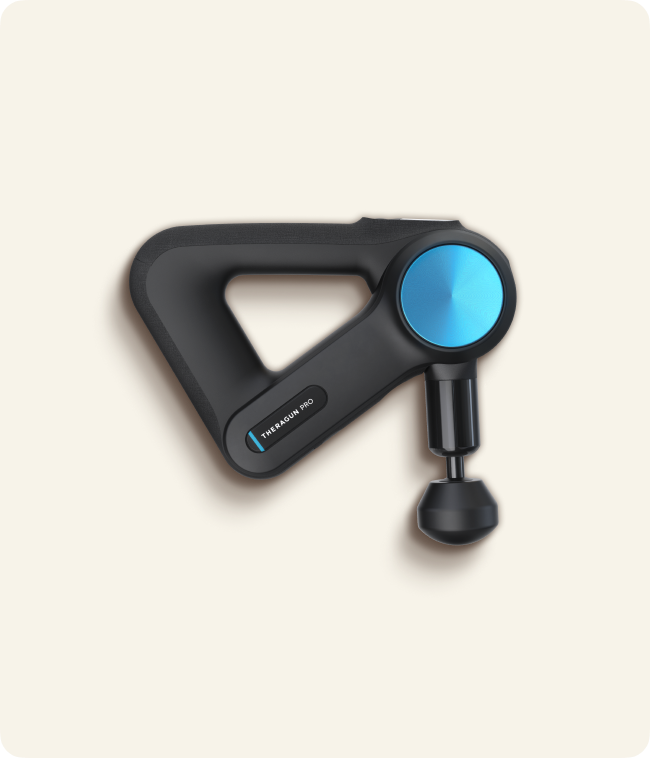
Consumer electronics ecosystems matter more than price-sensitive buyers typically admit. If you already own a Theragun, you've already downloaded the Therabody app, you've already set up an account, you've already integrated recovery into your routine. Adding the Mask Glo is a five-minute onboarding rather than a cold start.
Concretely, the Therabody app offers cross-product recovery protocols — for example, a pre-sleep sequence that combines a Theragun lower-body session, a RecoveryAir leg compression cycle, and a TheraFace Mask Glo red + NIR session, all guided in a single app flow. The Mask Glo alone is one product; the Mask Glo inside the ecosystem is a component in a larger system, and those system-level benefits are genuinely harder to replicate by mixing devices from three different brands.
Flip side: if you've never bought a Therabody product, you're buying the component without the system. The app still works. The LED treatment still works. But you're paying a premium partly for ecosystem access you're not fully using.
Pros and cons
- 504 LEDs — genuinely most in any mass-market mask
- Three wavelengths covered: red (630 nm), NIR (810 nm), blue (415 nm)
- FDA-cleared via 510(k), not merely registered
- Best cost-per-LED in the category at $0.79
- Wireless during treatment — no tethered controller
- 2-year warranty is above average
- Therabody app integration and cross-product recovery routines
- Vibration headband is defeatable for users who don't want it
- Solid brand track record and customer support
- Even LED coverage to the perimeter (hairline, jawline)
- Rigid shell is bulkier and heavier than flexible-silicone rivals
- Vibration feature is genuinely polarising — not for everyone
- Irradiance in mW/cm² is not published
- EMF measurements are not published
- Premium price at $399 vs. $249 capable alternatives
- 30-day return window is standard, not generous
- Not travel-friendly — bulky to pack
- Ecosystem value is under-realised if you don't already own Therabody
Who should buy this?
Buy it if
- You're already in the Therabody ecosystem. You own a Theragun, use the app, and want the LED piece of the recovery stack to match.
- You want the most LEDs per dollar in a name-brand mask. At $0.79 per LED, nothing else in the premium tier touches it.
- You'd actually use the vibration feature. You enjoy scalp massage, do your skincare pre-bed, or have tension-prone scalps and temples.
- You value FDA clearance and a 2-year warranty. Low-risk, well-supported purchase.
- You want wireless, untethered treatment. No controller puck, no wall cable during sessions.
Skip it if
- You want the slimmest, most portable mask. Look at the Omnilux Contour or a flexible-silicone alternative.
- The vibration feature doesn't appeal to you. You can defeat it, but you're paying for hardware you won't use.
- You're budget-conscious. The Shark CryoGlow at $350 or INIA Glow at $249 are more aggressively priced.
- Published irradiance and EMF data are non-negotiable for you. The Omnilux Contour publishes both.
- You travel constantly. A rigid hard-shell mask is not a carry-on item.
Competitors to consider
TheraFace Mask Glo vs. Omnilux Contour Face
Omnilux ($395) is the clinical specialist — 40+ peer-reviewed studies, published irradiance, medical-grade credibility. It has fewer LEDs (132) and no vibration, but more clinical validation per wavelength and a more packable flexible-silicone design. Choose Omnilux for maximum anti-aging evidence. Choose TheraFace for ecosystem, LED count, and wireless use. Full Omnilux review →
TheraFace Mask Glo vs. INIA Glow
INIA Glow ($249) is the best price-per-feature mask in the category: 272 LEDs, four modes, fully wireless via magnetic battery hub. Costs $150 less. Lacks the ecosystem, FDA 510(k) clearance, and warranty depth of the TheraFace. Choose INIA if value is the priority; choose TheraFace if brand trust and ecosystem matter.
TheraFace Mask Glo vs. Shark CryoGlow
Our #1 overall pick for 2026, the Shark CryoGlow ($350) adds integrated under-eye cooling (InstaChill) that no other mask offers, with short 4–8 minute treatment times. Fewer LEDs (~120 tri-wick). Requires tethered controller. Choose CryoGlow for under-eye puffiness and daily adherence; choose TheraFace for LED count and recovery ecosystem.
TheraFace Mask Glo vs. Dr. Dennis Gross SpectraLite FaceWare Pro
Dr. Dennis Gross ($435) is the dermatologist-brand mask with strong pedigree and a hands-free design. Fewer LEDs (~100), dual-wavelength red + blue, shorter 3-minute sessions. Choose DDG for the dermatologist brand halo and faster sessions; choose TheraFace for more LEDs, NIR wavelength, and vibration therapy.
Frequently asked questions
Is the vibration feature actually useful?
For some people, yes — particularly for evening wind-down routines, users with scalp or temple tension, and anyone who already enjoys Theragun-style percussive massage. For others, it's distracting or gimmicky. Therabody built it to be fully defeatable, so if you don't enjoy it you can switch it off and use the mask as a pure LED device. The honest answer: it's a real feature for the subset of buyers who will use it, and dead weight for the rest. Decide based on whether you already like scalp massage.
How does the TheraFace Mask Glo compare to Dr. Dennis Gross?
The Dr. Dennis Gross SpectraLite FaceWare Pro has roughly 100 LEDs across red and blue wavelengths, with 3-minute sessions and a slim, minimalist hands-free design. The TheraFace has 504 LEDs, adds NIR (810 nm), has longer session options (3/6/9 min), and adds vibration therapy. DDG costs $435 vs TheraFace's $399. Choose DDG for the dermatologist brand pedigree, slim form factor, and shorter sessions. Choose TheraFace for more LEDs, a third wavelength (NIR), and the Therabody ecosystem.
Can I use the TheraFace Mask Glo with my Theragun app?
Yes. Both devices are managed through the unified Therabody app (iOS and Android). You can run guided combined routines — for example, a pre-sleep sequence that cues a Theragun lower-body massage followed by a TheraFace Mask Glo red + NIR session — from a single app. If you already have the Therabody app on your phone for your Theragun, adding the Mask Glo is a simple device-pairing step.
Is the battery life good enough for daily use?
Yes. The Mask Glo runs on an internal rechargeable battery rated for multiple full sessions between charges. For typical daily use (one 6–9 minute session per day), you'll charge it once or twice a week via USB-C. Unlike the Shark CryoGlow, which requires a tethered controller, you're genuinely wireless during every treatment.
Can I customize the light modes?
The Mask Glo offers three pre-set light modes (red, red + NIR, blue) with fixed wavelengths and pre-set session lengths (3, 6, or 9 minutes depending on mode). You cannot create arbitrary wavelength combinations or custom session durations from the mask itself. The Therabody app lets you sequence the modes as part of guided routines, but the underlying light modes are not user-configurable. For most users this is fine; for tinkerers who want to dial in specific protocols, the rigidity may feel limiting.
Is the TheraFace Mask Glo worth $399?
If you're in the Therabody ecosystem or you'll use the vibration feature, yes. At $0.79 per LED it's the best cost-per-LED in any name-brand mask, the 2-year warranty and FDA clearance are above average, and the ecosystem integration is real. If you're not in the ecosystem and don't care about vibration, you can get a comparable pure-LED experience for $150 less with the INIA Glow. The Mask Glo isn't overpriced for what it is, but it is premium-priced for buyers who won't use all of what it is.
The bottom line
The TheraFace Mask Glo is a legitimately ambitious LED mask. 504 LEDs, three clinically-relevant wavelengths, FDA clearance, wireless operation, and genuine ecosystem integration with one of the most recognisable recovery-tech brands on the market. It is not a token spec-sheet stunt. The hardware and the brand backing are real.
Our 7.6/10 score reflects what it is honestly: a top-shelf product with two soft spots. The first is form factor — the rigid hard shell is a genuine step back in comfort and portability versus flexible silicone alternatives. The second is premium pricing — $399 is defensible if you use the whole feature set (ecosystem, vibration, all three wavelengths) and expensive if you don't.
We recommend the Mask Glo if:
- You are already a Therabody user and you want the LED piece of the recovery stack to live in the same app as your Theragun and RecoveryAir.
- Or, specifically, you want the highest LED count available in a name-brand, FDA-cleared mask, and you value the 2-year warranty that comes with it.
For everyone else, we'd point you at the Shark CryoGlow (our #1 overall pick), the Omnilux Contour (for clinical rigour), or the INIA Glow (for value). All three are excellent in their own categories, and two of them are cheaper. The TheraFace Mask Glo is the right mask for a specific buyer — and for that buyer, it's a very good one.
Check Price on Amazon → Shop at Therabody →