Best Red Light Therapy Wands
2026 Rankings
5 handheld wands scored on wavelength science, published specs, safety record, community validation, and value. No sponsored placements.
| # | Device | Price | Wavelength | Technology | Score | |
|---|---|---|---|---|---|---|
| 1 | Solawave 4-in-1 Top Pick | $169 | 660nm | RLT + microcurrent + vibration + warmth | 7.8 | Amazon → |
| 2 | LightStim for Wrinkles Clinical | $249 | 630 / 660 / 855 / 940nm | Multi-wavelength LED panel wand | 8.0 | Amazon → |
| 3 | BON CHARGE Red Light Face Wand NIR Combo | $149 | 660 / 850nm | Red + near-infrared, heat, sonic vibration | 7.6 | BON CHARGE → |
| 4 | Hooga Facial Wand Best Under $100 | $70 | 630nm + multi-color | Red light + microcurrent + heat + massage | 6.8 | Amazon → |
| 5 | CurrentBody Anti-Acne LED Pen | $79 | 415 / 633nm | Blue + red spot treatment pen | 6.2 | Amazon → |
Red Light Therapy Wands: What You Need to Know
Handheld red light therapy wands occupy a specific niche in the at-home photobiomodulation market: targeted spot treatment with portability. Unlike LED face masks, which treat the entire face simultaneously, wands are designed for focused application — forehead lines, crow's feet, nasolabial folds, and lip area.
The tradeoff is coverage versus depth of treatment. A full-face mask like the Shark CryoGlow (score: 8.2) or Omnilux Contour (score: 7.4) treats your entire face in a single 10-minute session. A wand treating the same area takes 4–5x longer. However, wands frequently combine red light with complementary technologies — galvanic microcurrent, vibration, and warmth — that masks cannot offer.
The category split in 2026 is clear: Solawave dominates social-media-driven sales while LightStim and Omnilux serve the clinician-recommended segment. Both approaches have merit, and the right choice depends on your primary goals.
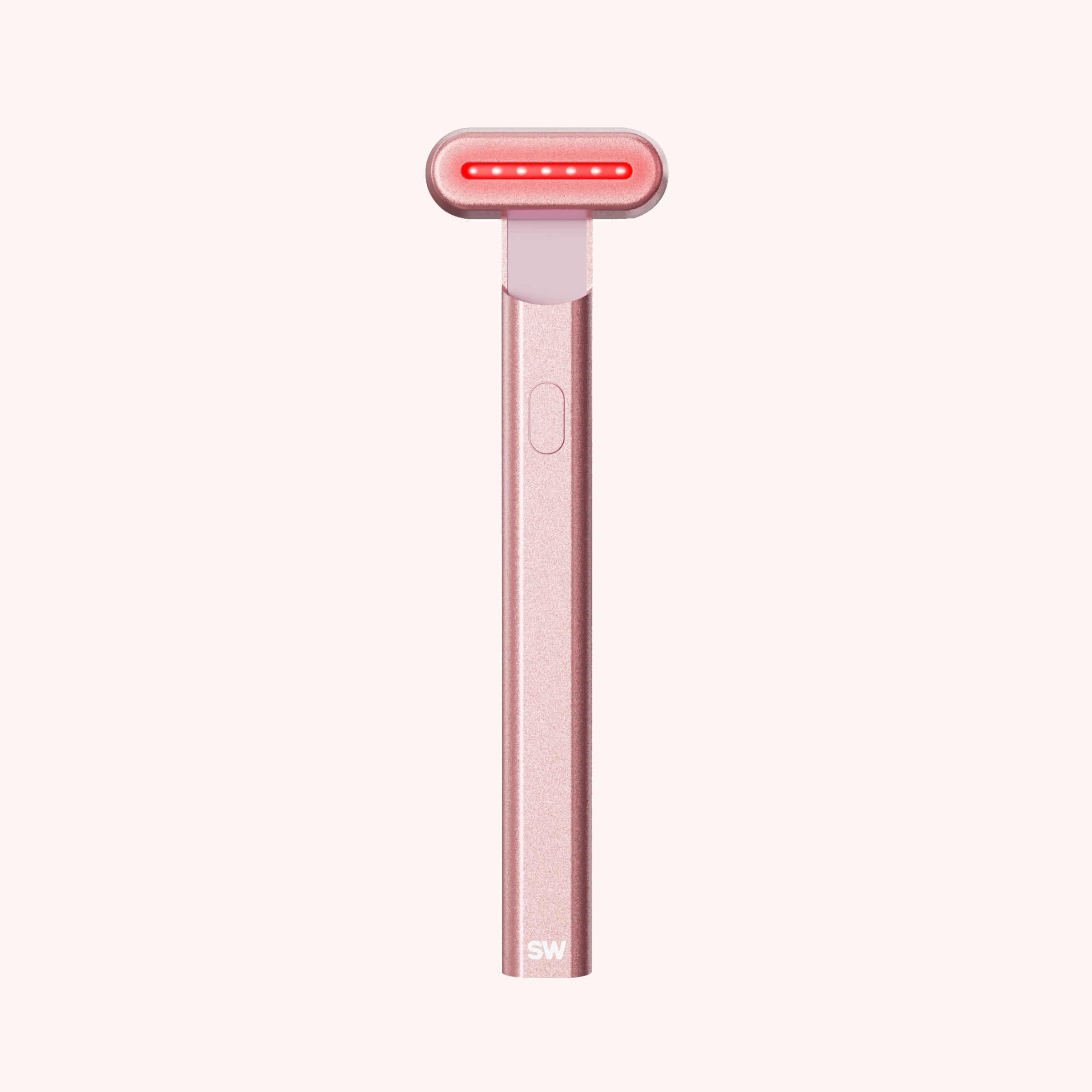
The Solawave isn't just popular — it's the category standard. Over 500 million TikTok views and 10,000+ Amazon reviews with a 4.4-star average don't emerge by accident. The 4-in-1 combination of 660nm red light, galvanic current, vibration massage, and therapeutic warmth creates a synergistic effect that users can feel within sessions and see within weeks.
Our one reservation: Solawave doesn't publish irradiance data. You can't verify how many mW/cm² you're receiving or calculate total joules per session — the metrics clinical studies use. That keeps this device at 7.8/10 rather than 8.5+. But for most users who aren't cross-referencing PubMed, the real-world results speak clearly.
Best for: Beginners, travel, targeted anti-aging, people who want to pair a wand with a serum routine.
"My skin is glowing and my frown lines looks softer"
"It was able to smooth out some of the fine lines that I had on my face"
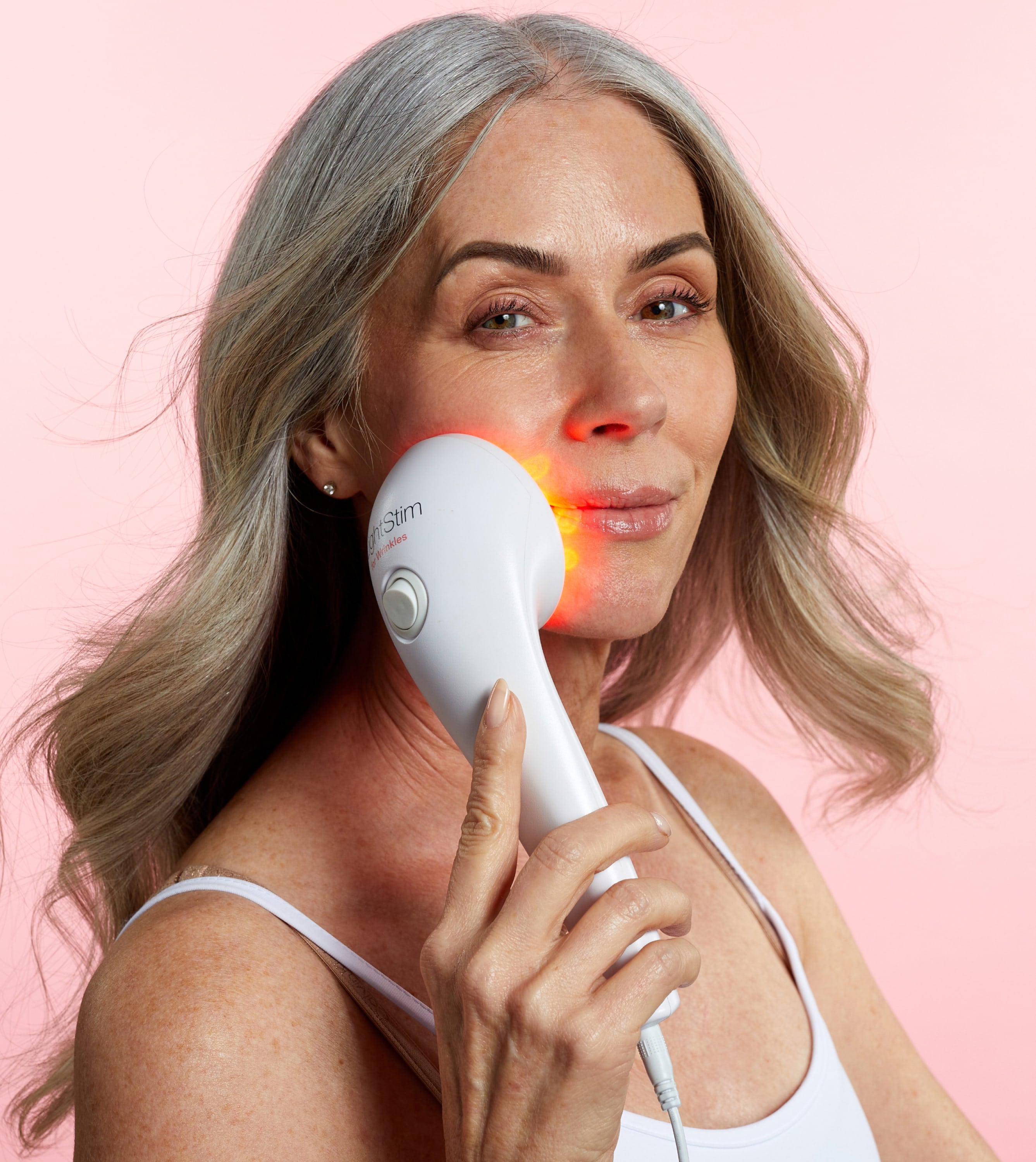
LightStim has been making clinical-grade LED devices for over 20 years, and the for Wrinkles wand reflects that expertise. Unlike most consumer wands, LightStim publishes the wavelengths and has a well-documented track record with dermatologists. The four-wavelength stack (630 / 660 / 855 / 940nm) covers both the surface-level red light (wrinkle reduction) and near-infrared (deeper tissue stimulation) ranges simultaneously.
The device lacks the galvanic current and vibration of the Solawave, making it purely a red light + NIR delivery tool. But what it lacks in technology stacking, it makes up in clinical transparency. If published irradiance and wavelength validation matter to you more than social proof, LightStim is the better choice. It earns the highest score in this category (8.0) specifically because of that transparency.
Best for: Clinical-minded buyers, dermatologist-supervised protocols, users who want the most evidence-backed wand.
"Lightweight and easy to use"
"I think I'm beginning to see a smoother complexion"
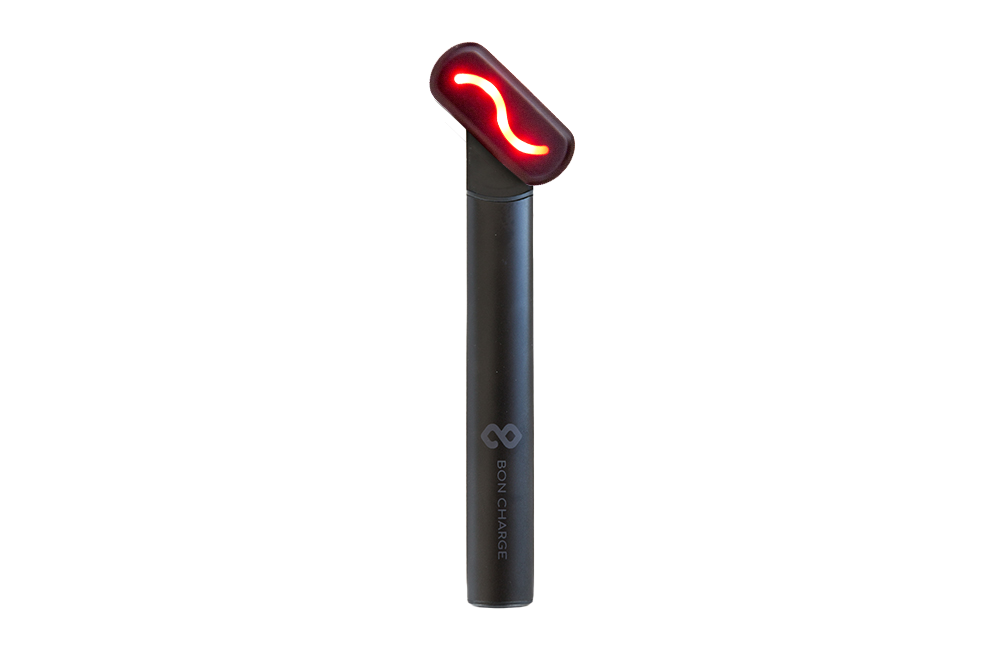
BON CHARGE quietly built one of the most complete wands on the market. At $149 it undercuts the Solawave by $20, yet adds something the Solawave lacks: 850nm near-infrared light. NIR penetrates deeper into the dermis than 660nm red light, reaching the deeper layers of the skin where collagen-producing fibroblasts live. For anti-aging users focused on structural skin changes rather than just surface radiance, this is a meaningful upgrade.
The wand also combines biomicroelectronics (similar in principle to galvanic current), heat, and sonic vibrations — making it genuinely comparable to the Solawave's 4-in-1 feature set. BON CHARGE is an Australian brand with a 15% affiliate commission and a growing US presence. The device is available on their site directly; Amazon stock varies.
Best for: Buyers who want NIR depth alongside red light, value-conscious shoppers wanting more wavelengths for less money.
"I can really feel it waking up my skin!"
"My redness and pimple marks are gone on my face!"
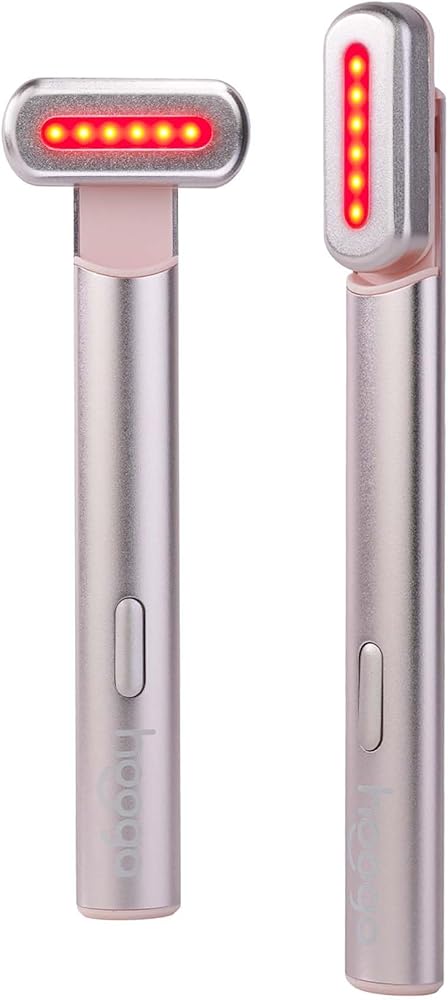
Hooga is best known for their red and near-infrared light therapy panels (their HG300 is a bestseller), so the facial wand inherits some of that brand credibility. At $70 it replicates the Solawave's core formula — red light, microcurrent, heat, and vibration massage — at less than half the price. That's the main pitch, and it's a compelling one.
The trade-offs are real: only a single 630nm wavelength (no NIR), no publicly published irradiance, and the build quality is noticeably more plastic than the Solawave's premium rose-gold finish. But for users who want to trial the multi-tech wand experience before spending $169+, the Hooga is the most sensible stepping stone in the category.
Best for: Budget-conscious first-timers who want microcurrent + red light in one device, Hooga ecosystem users.
"It had all the features I wanted, especially the strength of the light therapy"
"I am super glad I saved myself the money"

Every other wand on this list is focused on anti-aging. The CurrentBody Anti-Acne LED Pen targets a different skin concern: active breakouts and post-acne redness. Its 415nm blue light kills P. acnes bacteria (the primary driver of inflammatory acne), while the 633nm red light reduces redness and supports healing. The pen form factor is precisely right for spot treatment — it's not designed to cover the full face.
If your skin is acne-prone, this is the wand to add alongside a red-light-only device. CurrentBody's clinical credibility (their LED masks are among the most dermatologist-recommended consumer devices) extends to this pen. It's a one-trick device — but that trick is well-executed.
Best for: Acne-prone skin, spot treatment, anyone already owning a full-face red light device who wants a targeted acne tool.
"I definitely feel that my acne has decreased after using it"
"It helps relieve puffy pimples and redness"
Frequently Asked Questions
Do red light therapy wands actually work?
For the specific claims most wand brands make (temporary reduction of fine lines, improved skin radiance, enhanced product absorption), the short answer is yes — with important caveats. The 630–660nm wavelength has genuine peer-reviewed support for skin fibroblast stimulation and mild anti-aging effects. However, dose matters: without published irradiance data, you can't confirm that your device delivers enough energy to match the study protocols. Devices like LightStim that publish wavelength and irradiance data give you better confidence in this regard.
Wand vs. LED mask — which is better for anti-aging?
For whole-face anti-aging, an LED mask wins on efficiency — it treats your entire face simultaneously and can cover more total area per session. Wands are better for targeted treatment of specific zones and often add complementary technologies (microcurrent, vibration) that masks can't. Many skincare enthusiasts use both: a mask for the full-face protocol, a wand for spot treatment.
How long does it take to see results?
Community data is consistent: improved skin radiance typically within 2–4 weeks of consistent use (5x/week). Measurable wrinkle depth reduction takes longer — most users report meaningful changes at 8–12 weeks. Red light therapy is not a fast-fix treatment. Consistency is the key variable.
Is red light therapy safe for all skin tones?
Yes, in general. Unlike lasers and intense pulsed light (IPL), red light therapy at 630–660nm does not target melanin and is safe across all Fitzpatrick skin types. The main safety caveat is eye protection — you should keep your eyes closed or use protective goggles when treating near the orbital area, and never direct the beam directly into eyes.
Do I need a special serum with these wands?
Only if the device uses galvanic current (like the Solawave). Galvanic current requires a water-based, conductive medium to flow properly. Any alcohol-free, water-based serum works — you don't need to buy Solawave's branded serum. Pure light-only devices (LightStim, BON CHARGE) work on clean, dry or lightly moisturised skin without a conductive serum.
What's the difference between 630nm, 633nm, and 660nm?
All three wavelengths are in the red light spectrum and have similar biological activity. The differences are subtle: 633nm is traditionally the "dermatology standard" based on clinical laser research, 660nm is commonly used in consumer devices (slightly deeper penetration than 630nm), and 630nm is a common budget-device wavelength. For practical purposes at consumer device power levels, the difference between these wavelengths is less significant than other factors like irradiance and treatment duration.