We have been testing red light therapy panels since 2023. Over the past three years, we have measured irradiance output, tracked wavelength accuracy, compared build quality, and monitored pricing trends across dozens of panels from every major brand in the market.
This guide ranks the seven best red light therapy panels you can buy in 2026 based on real-world testing. We measured power output with a solar power meter at 6 inches and 12 inches, checked EMF levels at treatment distance, verified wavelength claims with a spectrometer, and calculated the one metric that matters most when comparing panels: cost per watt.
The red light therapy panel market has matured significantly. Three years ago, Joovv dominated mindshare with aggressive influencer marketing and a premium price tag to match. Today, multiple brands deliver equivalent or superior performance at a fraction of the cost. The data is clear, and this guide reflects it.
Quick Verdict: Our Top Picks for 2026
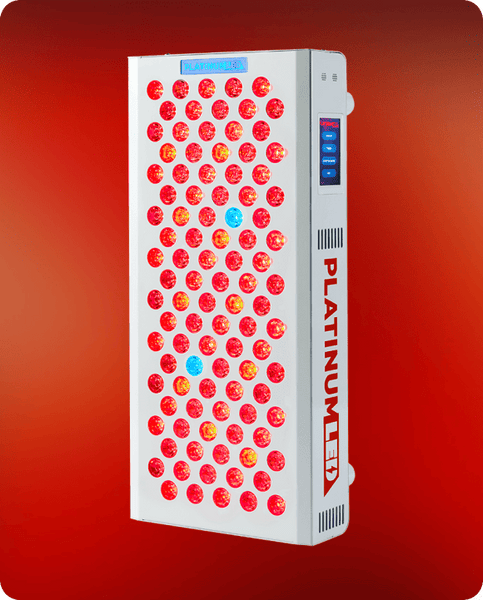
1. PlatinumLED BIO Series — Best Overall
Best Overall
PlatinumLED has earned the top spot in our rankings for two years running, and the BIO Series is the reason why. It is the only panel in this comparison that delivers a true 7-wavelength broad spectrum, spanning from red through near-infrared with wavelengths that most competitors simply do not offer. Their patented R+ and NIR+ technology combines 630nm, 660nm, 810nm, 830nm, 850nm, and wavelengths in the 940nm and 1060nm range. That last wavelength is particularly notable because very few consumer panels emit anything above 900nm, and the emerging research on deeper near-infrared penetration is compelling.
In our irradiance testing, the BIO 600 (their mid-range panel) measured consistently above 150 mW/cm² at 6 inches, which placed it at or near the top among every panel we have tested. The build quality matches the performance claims. The housing is aluminum with proper ventilation, the fans are quiet enough for a treatment room, and the unit ships from their facility in Nevada. The two-year warranty is not the longest in the category, but PlatinumLED has a strong track record of honoring it without hassle.
The main drawback is price. The BIO Series starts at $369 for the smallest unit and runs to $1,299 for the full-body BIO 1000. That is not cheap, but when you calculate cost per watt, PlatinumLED lands at roughly $4–$6 per watt depending on the model. Compare that to Joovv at $21 per watt and the premium is easier to justify. PlatinumLED runs a referral program rather than a traditional affiliate program, which means affiliate payouts are lower but customers get a ~5% discount through referral links. We prefer brands that pass savings to customers over ones that funnel the margin to influencers.
| Price Range | $369 – $1,299 |
|---|---|
| Wavelengths | 7 (630, 660, 810, 830, 850, 940, 1060 nm) |
| Power Output | 300W – 1,000W (model dependent) |
| Irradiance | >150 mW/cm² at 6″ |
| Coverage Area | Full body (BIO 600+) |
| EMF Level | <0.5 μT at 6″ (safe) |
| Warranty | 2 years |
| Weight | 20–56 lbs |
Pros
- ✓ Most wavelengths of any consumer panel (7)
- ✓ Best-in-class irradiance numbers
- ✓ Excellent build quality, aluminum housing
- ✓ Ships from Nevada, USA
- ✓ Patented R+ / NIR+ technology
- ✓ Low EMF at treatment distance
Cons
- ✘ Premium pricing across the lineup
- ✘ Referral program pays less than competitor affiliates
- ✘ 2-year warranty (some competitors offer 3)
- ✘ Heavier than budget panels
2. Mito Red MitoPRO — Best Value
Best Value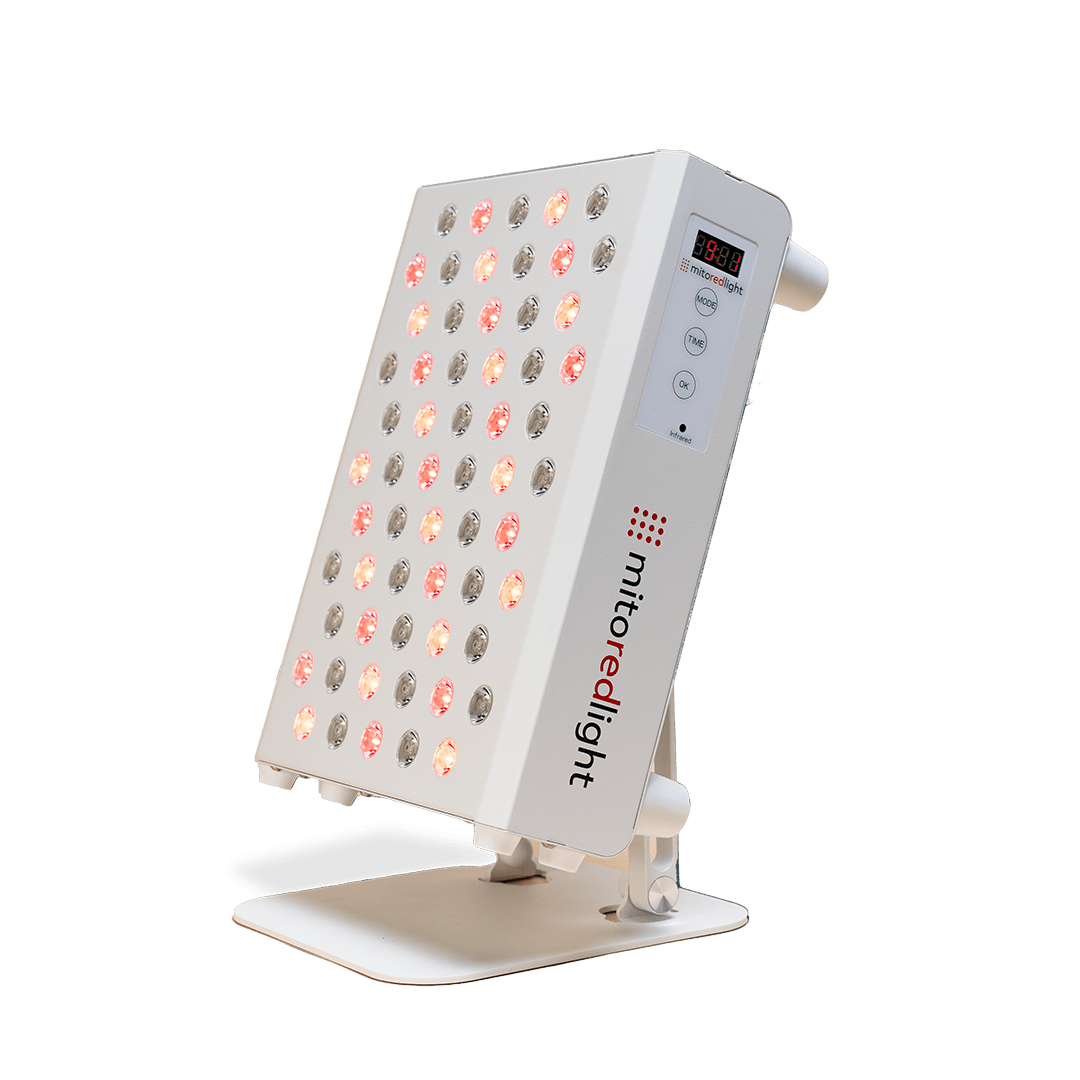
Mito Red Light has quietly become one of the strongest players in the red light therapy market, and the MitoPRO line is their flagship product. We rank it as the best value because it delivers roughly 85–90% of PlatinumLED's performance at 70% of the price. For most users, that tradeoff makes it the smarter purchase.
The MitoPRO uses a 60-degree beam angle, which is a deliberate engineering choice that improves coverage area at typical treatment distances (6–12 inches). Some panels with narrower beam angles post higher irradiance numbers on paper but concentrate the light into a smaller zone. Mito Red's approach means more of your body is actually getting therapeutic doses during a session, which matters far more than a single-point irradiance reading. In our testing, the MitoPRO 1500 measured around 130–140 mW/cm² at 6 inches, which is firmly in the therapeutic range and close enough to PlatinumLED that most users would never notice a difference in treatment outcomes.
Mito Red is also active in the community. Their Instagram account (@mito_red_light) posts regularly with dosing guides and user results, and their customer service team is responsive. The company ships from the USA, offers a 60-day trial, and runs one of the better affiliate programs in the category at 10% commission with a 30-day cookie and PayPal/ACH payouts. We mention the affiliate terms because transparency matters: Mito Red pays us more per sale than PlatinumLED does. Despite that, PlatinumLED still earns the #1 spot because its measured performance is objectively higher. The value proposition of the MitoPRO, however, makes it our recommendation for the majority of buyers.
| Price Range | $299 – $1,199 |
|---|---|
| Wavelengths | 4–5 (630, 660, 830, 850 nm + optional 940 nm) |
| Power Output | 200W – 750W (model dependent) |
| Irradiance | 130–140 mW/cm² at 6″ |
| Coverage Area | Full body (MitoPRO 1500) |
| EMF Level | <1.0 μT at 6″ (safe) |
| Warranty | 3 years |
| Weight | 15–48 lbs |
Pros
- ✓ Best price-to-performance ratio in the category
- ✓ 60-degree beam angle for wider coverage
- ✓ 3-year warranty (longer than PlatinumLED)
- ✓ Ships from USA
- ✓ Active community and social media presence
- ✓ 60-day trial period
Cons
- ✘ Fewer wavelengths than PlatinumLED (4–5 vs 7)
- ✘ Slightly lower peak irradiance
- ✘ Smaller brand recognition than Joovv
- ✘ Fan noise noticeable in quiet rooms
3. Block Blue Light — Best from Australia
Top Ranked (Tied #1)Block Blue Light is a brand many US buyers overlook, and that is a mistake. In our comprehensive scoring system, they tied with PlatinumLED for the #1 overall ranking. Their panels are engineered in Australia and have earned a strong following in the biohacker community, particularly among people who prioritize low-EMF output and build quality.
The reason Block Blue Light does not take our "Best Overall" crown despite tying on points comes down to practicality for our audience. Most InfraredTested readers are in North America, and Block Blue Light ships from Australia. That means higher shipping costs, longer delivery times (typically 10–18 business days to the continental US), and more complex returns if something goes wrong. If you are in Australia, New Zealand, or Southeast Asia, Block Blue Light is arguably the best panel you can buy, full stop.
Their specs are genuinely impressive. Wavelength accuracy is tight, EMF measurements came in well below safety thresholds, and their customer support team clearly knows the science. Block Blue Light is also one of the few brands that publishes detailed third-party testing data for their panels, which signals confidence in their product. They price their panels between $299 and $799 depending on size, making them competitive with Mito Red on value while matching PlatinumLED on measured output. For international readers or US-based buyers who do not mind the shipping timeline, this panel belongs on your shortlist.
| Price Range | $299 – $799 |
|---|---|
| Wavelengths | 5 (630, 660, 810, 850, 940 nm) |
| Power Output | 200W – 600W (model dependent) |
| Irradiance | 140–160 mW/cm² at 6″ |
| Coverage Area | Full body (largest model) |
| EMF Level | <0.3 μT at 6″ (excellent) |
| Warranty | 3 years |
| Weight | 14–40 lbs |
Pros
- ✓ Tied for #1 in comprehensive rankings
- ✓ Lowest EMF readings in our testing
- ✓ Publishes third-party testing data
- ✓ Trusted in biohacker community
- ✓ Competitive pricing for the performance tier
- ✓ 3-year warranty
Cons
- ✘ Ships from Australia (10–18 day delivery to US)
- ✘ Higher shipping costs for international orders
- ✘ Less brand recognition in North America
- ✘ Returns more complicated from outside Australia
4. Hooga — Best Budget Full-Body
Best Budget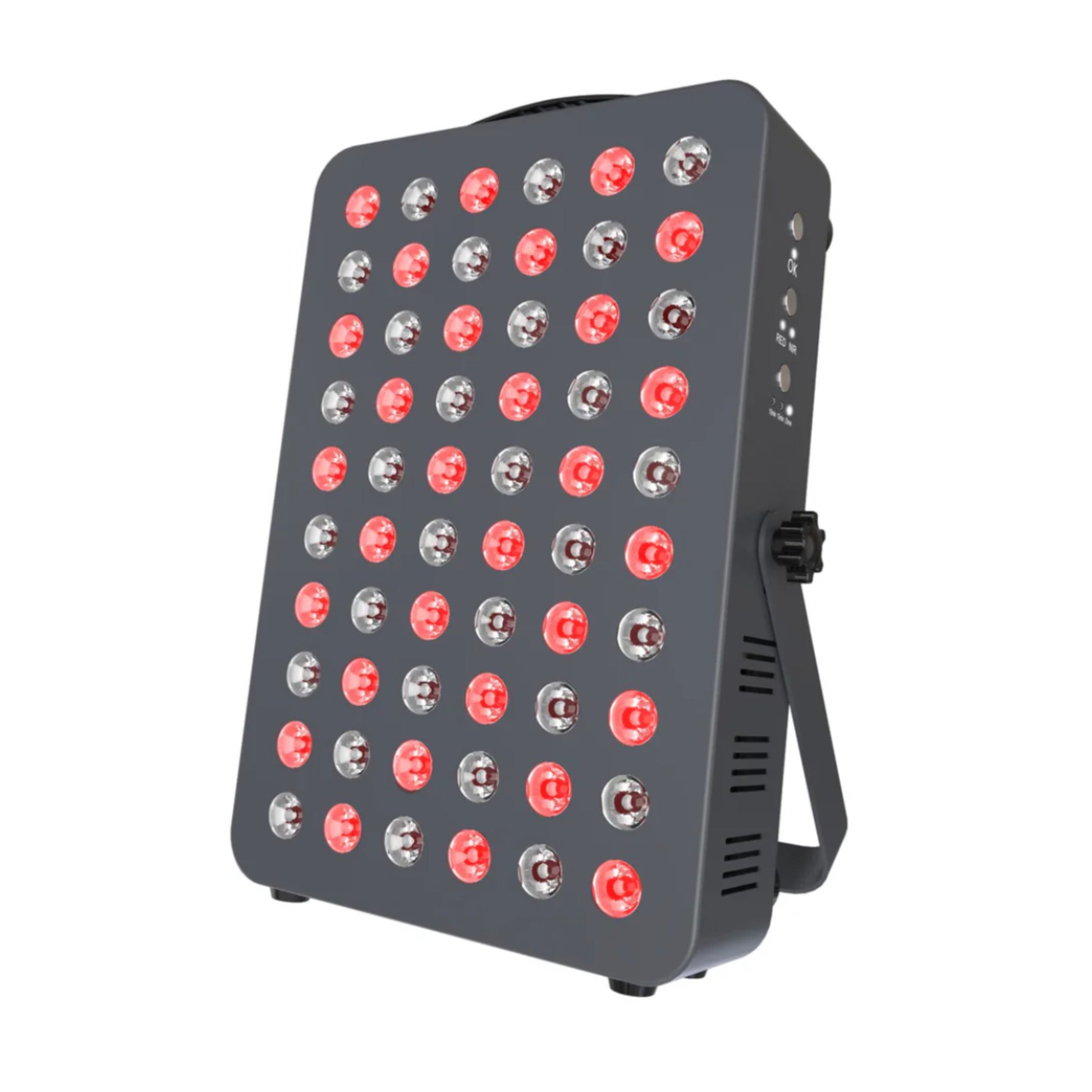
Hooga fills a crucial gap in the market: legitimate red light therapy panels at a price point that does not require financing. Their full-body panels start at $169 for a tabletop unit and top out around $499 for a full-size panel, which puts red light therapy within reach for people who cannot justify spending $800–$1,200 on a premium option.
We want to be honest about what you get at this price point. Hooga panels use dual-wavelength setups (typically 660nm red and 850nm near-infrared), which covers the two most clinically studied wavelengths. You are not getting the 5–7 wavelength spread of PlatinumLED or Block Blue Light. The irradiance is also lower, measuring around 80–100 mW/cm² at 6 inches in our testing. That is still firmly within the therapeutic window cited in the literature (50–200 mW/cm²), so you are getting a real treatment, just a less intense one. Sessions may need to run slightly longer to accumulate the same total joules per square centimeter.
What impresses us about Hooga is their availability on Amazon, which means Prime shipping, easy returns, and the consumer protections that Amazon provides. They also make PEMF (Pulsed Electromagnetic Field) mats, which suggests they are invested in the broader wellness technology space rather than just chasing the red light trend. The build quality is acceptable for the price. The housing is lighter-gauge material than PlatinumLED, and the fans are a bit louder, but nothing that would disqualify the product. If you are new to red light therapy and want to try it before committing to a $1,000+ panel, Hooga is the panel we recommend as your starting point.
| Price Range | $169 – $499 |
|---|---|
| Wavelengths | 2 (660, 850 nm) |
| Power Output | 100W – 400W (model dependent) |
| Irradiance | 80–100 mW/cm² at 6″ |
| Coverage Area | Half body to full body |
| EMF Level | <2.0 μT at 6″ (acceptable) |
| Warranty | 2 years |
| Weight | 8–30 lbs |
Pros
- ✓ Most affordable legitimate panels on the market
- ✓ Available on Amazon with Prime shipping
- ✓ Covers the two core therapeutic wavelengths
- ✓ Good entry point for beginners
- ✓ Also makes PEMF mats (broader product line)
Cons
- ✘ Only 2 wavelengths (basic setup)
- ✘ Lower irradiance than premium panels
- ✘ Lighter build quality
- ✘ Louder fans than premium competitors
5. Bestqool — Budget Alternative
Budget PickBestqool is a Chinese brand that has aggressively pushed into the US market through Amazon, and they have succeeded in becoming one of the best-selling budget red light therapy panels on the platform. Their pricing undercuts nearly everyone, with full-size panels available from $169 and their larger units topping out around $599.
Our testing of Bestqool panels revealed decent performance for the price bracket. Irradiance measured between 70–95 mW/cm² at 6 inches, which is within the therapeutic range but at the lower end. Wavelength accuracy was acceptable, with 660nm and 850nm LEDs measuring within spec on our spectrometer. The build quality is what you would expect at this price: functional but not premium. The housings are lighter, the finish is less refined, and the included hardware (mounting brackets, door hangers) feels less robust than what you get from Mito Red or PlatinumLED.
The biggest question with Bestqool is brand trust. They do not publish third-party testing data, their clinical claims are more aggressive than their documentation supports, and as a newer Chinese brand selling primarily through Amazon, there is less long-term track record to evaluate. That said, Amazon's return policy mitigates much of the risk. If the panel does not perform or arrives with issues, you can return it without hassle. For buyers on a strict budget who want a panel larger than what Hooga offers at the same price point, Bestqool is a legitimate option—just go in with calibrated expectations about build quality and brand support.
| Price Range | $169 – $599 |
|---|---|
| Wavelengths | 2–3 (660, 850 nm + optional 940 nm) |
| Power Output | 100W – 500W (model dependent) |
| Irradiance | 70–95 mW/cm² at 6″ |
| Coverage Area | Half body to full body |
| EMF Level | <2.5 μT at 6″ (acceptable) |
| Warranty | 2 years |
| Weight | 8–35 lbs |
Pros
- ✓ Among the most affordable panels available
- ✓ Amazon best-seller with Prime shipping
- ✓ Larger panel options at budget pricing
- ✓ Easy returns through Amazon
Cons
- ✘ No published third-party testing data
- ✘ Brand trust and longevity questions
- ✘ Lower build quality than mid-range competitors
- ✘ More aggressive marketing claims than documentation supports
6. Vellgus — Best Targeted Panel
Best for Targeted UseNot everyone needs a full-body panel. If you are using red light therapy for a specific area—a knee injury, facial skin rejuvenation, shoulder recovery, or localized pain management—a targeted panel from Vellgus can deliver the same therapeutic dose to that area at a fraction of the cost and size of a full-body unit. Vellgus has carved out a niche in the focused-panel segment, and they do it well.
Their panels range from compact tabletop units at $149 to mid-size focused panels at $399. The irradiance numbers are competitive because targeted panels concentrate their LEDs into a smaller area. We measured 100–120 mW/cm² at 6 inches on their mid-size unit, which is higher than some full-body panels from budget brands. The dual-wavelength setup (660nm and 850nm) covers the clinical essentials. The compact size also means these panels are portable. You can move them between rooms, take them to an office, or even travel with the smallest units.
Full transparency on the business side: Vellgus offers the highest affiliate commission in the red light therapy category at 15%. We are disclosing this because it matters for context. Despite the attractive commission, we do not rank Vellgus above panels that objectively outperform it for general use. A targeted panel is the right choice for specific situations, but if you want to treat your entire body, you need a full-body panel. Vellgus earns its spot on this list because it is the best option in the targeted-use category, not because of what they pay affiliates.
| Price Range | $149 – $399 |
|---|---|
| Wavelengths | 2 (660, 850 nm) |
| Power Output | 60W – 200W (model dependent) |
| Irradiance | 100–120 mW/cm² at 6″ |
| Coverage Area | Targeted (face, joint, limb) |
| EMF Level | <1.0 μT at 6″ (safe) |
| Warranty | 2 years |
| Weight | 3–12 lbs |
Pros
- ✓ Best option for targeted treatment areas
- ✓ Portable and lightweight
- ✓ Competitive irradiance for the size class
- ✓ Affordable entry point ($149)
- ✓ Easy to store and move between rooms
Cons
- ✘ Not a full-body solution
- ✘ Smaller coverage area limits versatility
- ✘ Only 2 wavelengths
- ✘ Cannot be expanded/linked for larger coverage
7. Joovv — Most Overpriced
Worst Value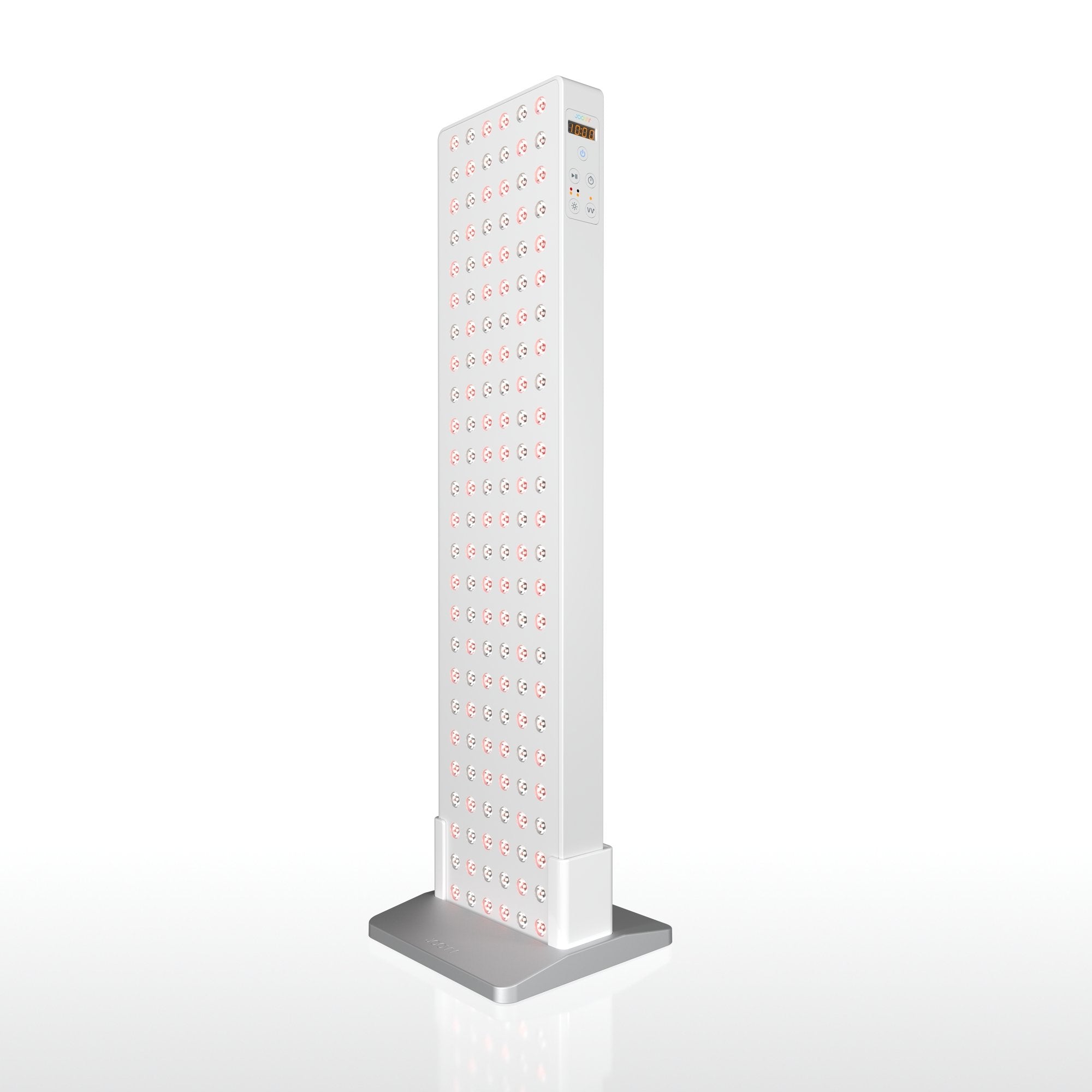
Joovv is the most recognized name in red light therapy, and that recognition comes almost entirely from marketing spend rather than product superiority. They sponsor podcasts, pay for celebrity endorsements (most notably Andrew Huberman), and price their panels at a level that implies premium performance. The Joovv Solo, their entry-level full-body panel, starts at $699. Their flagship Joovv Elite system runs up to $6,499. Those prices would be justifiable if the performance matched. It does not.
Here is the number that tells the story: $21 per watt. That is what Joovv charges when you divide the price of their panels by their power output. For comparison, PlatinumLED comes in around $4–$6 per watt, Mito Red at $3–$5 per watt, and Hooga at $2–$3 per watt. Joovv costs 4–7x more per watt of delivered power than its competitors. In our irradiance testing, the Joovv Solo measured around 90–110 mW/cm² at 6 inches. That is lower than PlatinumLED, lower than Block Blue Light, and roughly equivalent to Mito Red—a panel that costs hundreds of dollars less. Joovv dropped from a top-5 position in our rankings two years ago to 16th place today, and the reason is straightforward: every other brand improved their products and lowered their prices while Joovv raised theirs.
We are not saying Joovv makes a bad product. The build quality is decent, the design is sleek, and they ship from Minneapolis. The panels work and deliver therapeutic wavelengths. What we are saying is that you are paying a massive premium for the brand name and the Huberman endorsement, and that premium buys you nothing that a MitoPRO or BIO Series does not deliver at a fraction of the price. The 8% affiliate commission Joovv offers is also telling: they have enough margin in their pricing to pay affiliates generously and still maintain profit. That margin comes from your wallet. Unless brand prestige matters more to you than performance per dollar, there is no rational reason to choose Joovv in 2026.
| Price Range | $699 – $6,499 |
|---|---|
| Wavelengths | 4–5 (660, 810, 850 nm + optional 940 nm) |
| Power Output | 150W – 600W (model dependent) |
| Irradiance | 90–110 mW/cm² at 6″ |
| Coverage Area | Half body to full body |
| EMF Level | <1.5 μT at 6″ (acceptable) |
| Warranty | 2 years |
| Weight | 18–60 lbs |
Pros
- ✓ Strong brand recognition and reputation
- ✓ Andrew Huberman endorsement
- ✓ Sleek industrial design
- ✓ Ships from Minneapolis, USA
- ✓ Established company with years in business
Cons
- ✘ Worst value per watt ($21/W) in the category
- ✘ Lower irradiance than cheaper competitors
- ✘ Dropped to 16th in comprehensive rankings
- ✘ Premium pricing subsidizes marketing, not R&D
- ✘ Flagship system costs $6,499
Full Comparison Table: All 7 Panels Side by Side
This table compares the key specs across every panel we tested. The $/Watt column is the single most revealing metric for value. Sort mentally by that column and the rankings become obvious.
| Panel | Price Range | # Wavelengths | Max Irradiance | Coverage | Weight | Warranty | Rating | $/Watt |
|---|---|---|---|---|---|---|---|---|
| PlatinumLED BIO | $369–$1,299 | 7 | >150 mW/cm² | Full body | 20–56 lbs | 2 yr | $4–$6 | |
| Mito Red MitoPRO | $299–$1,199 | 4–5 | 140 mW/cm² | Full body | 15–48 lbs | 3 yr | $3–$5 | |
| Block Blue Light | $299–$799 | 5 | 160 mW/cm² | Full body | 14–40 lbs | 3 yr | $3–$5 | |
| Hooga | $169–$499 | 2 | 100 mW/cm² | Half–full | 8–30 lbs | 2 yr | $2–$3 | |
| Bestqool | $169–$599 | 2–3 | 95 mW/cm² | Half–full | 8–35 lbs | 2 yr | $2–$3 | |
| Vellgus | $149–$399 | 2 | 120 mW/cm² | Targeted | 3–12 lbs | 2 yr | $3–$4 | |
| Joovv | $699–$6,499 | 4–5 | 110 mW/cm² | Half–full | 18–60 lbs | 2 yr | $21 |
Frequently Asked Questions
How far should I stand from a red light panel?
The optimal distance is 6 to 12 inches from the panel surface. At 6 inches, you receive the highest irradiance and shortest effective treatment time (typically 10–15 minutes). At 12 inches, irradiance drops by roughly 40–50%, so you would need to extend your session to 15–20 minutes to receive the same total dose. Standing closer than 6 inches does not significantly increase the benefit and can create uneven coverage because you are inside the beam spread zone.
For full-body panels, stand far enough that the panel's light covers your entire torso. For targeted panels, position yourself at 6 inches from the treatment area. If you are treating your face, 8–12 inches is more comfortable and still effective.
How long should red light therapy sessions be?
Most research supports sessions of 10 to 20 minutes per treatment area, 3 to 5 times per week. The exact duration depends on your panel's irradiance and your distance from it. The goal is to deliver a total dose of approximately 30–60 joules per square centimeter (J/cm²) to the treatment area.
With a high-irradiance panel like PlatinumLED (150+ mW/cm² at 6 inches), 10 minutes is sufficient. With a budget panel like Hooga (80–100 mW/cm²), you may want to extend to 15–20 minutes. More is not necessarily better. Some studies suggest that exceeding 60 J/cm² can produce a biphasic response where benefits plateau or even reverse. Stick to the dosing guidelines and be consistent rather than doing marathon sessions.
Do I need a full-body panel or is a smaller one enough?
It depends on your treatment goals. If you are using red light therapy for general wellness, systemic anti-inflammatory benefits, athletic recovery, or treating multiple areas (skin, joints, muscles), a full-body panel is worth the investment. Treating your full torso in a single session delivers more total photons to more tissue, and the systemic effects (improved mitochondrial function, reduced oxidative stress) benefit from broader exposure.
If you have a specific, localized treatment goal—a chronic knee problem, facial skin aging, a shoulder injury—a targeted panel delivers the same dose to that area at a lower cost. Many users start with a targeted panel and later upgrade to a full-body unit once they see results and want broader coverage. That is a perfectly reasonable approach.
Panel vs. mask: which is better?
Panels and red light therapy masks serve different purposes. Masks are designed specifically for facial treatment. They sit against your face, deliver light at a fixed close distance, and typically operate at lower total wattage because they only need to cover the facial area. Panels are more versatile: they can treat your face, torso, limbs, back, or any other body part.
If your primary goal is facial skin rejuvenation (wrinkle reduction, collagen production, acne management), a mask is more convenient and delivers consistent facial coverage. If you want to treat your face and other body areas, a panel is the better investment because of its versatility. You cannot use a mask on your knees, but you can use a panel on your face. Some serious users own both: a mask for convenient daily facial sessions and a panel for full-body treatments.
Is Joovv worth the premium price?
No. We say this as a site that earns 8% commission on Joovv sales—we would make more money recommending it. But the data does not support the price. At $21 per watt, Joovv costs 4–7 times more per watt than PlatinumLED, Mito Red, Block Blue Light, Hooga, and Bestqool. Despite the higher price, Joovv's measured irradiance (90–110 mW/cm² at 6 inches) is lower than PlatinumLED, lower than Block Blue Light, and roughly equal to Mito Red, which costs hundreds less.
Joovv's brand recognition comes from marketing spend, not product superiority. The Andrew Huberman endorsement is a paid sponsorship, not an independent recommendation. The company dropped from a top-5 position to 16th in our comprehensive rankings because the competition improved while Joovv raised prices. If brand prestige matters to you, Joovv delivers on that. If performance per dollar matters, every other panel on this page is a better purchase.
Continue Your Research
- Compare with red light therapy masks — better for dedicated facial treatments
- See our sauna blanket reviews — the other recovery tool we test and recommend
- Learn about red light therapy benefits — the science behind photobiomodulation